
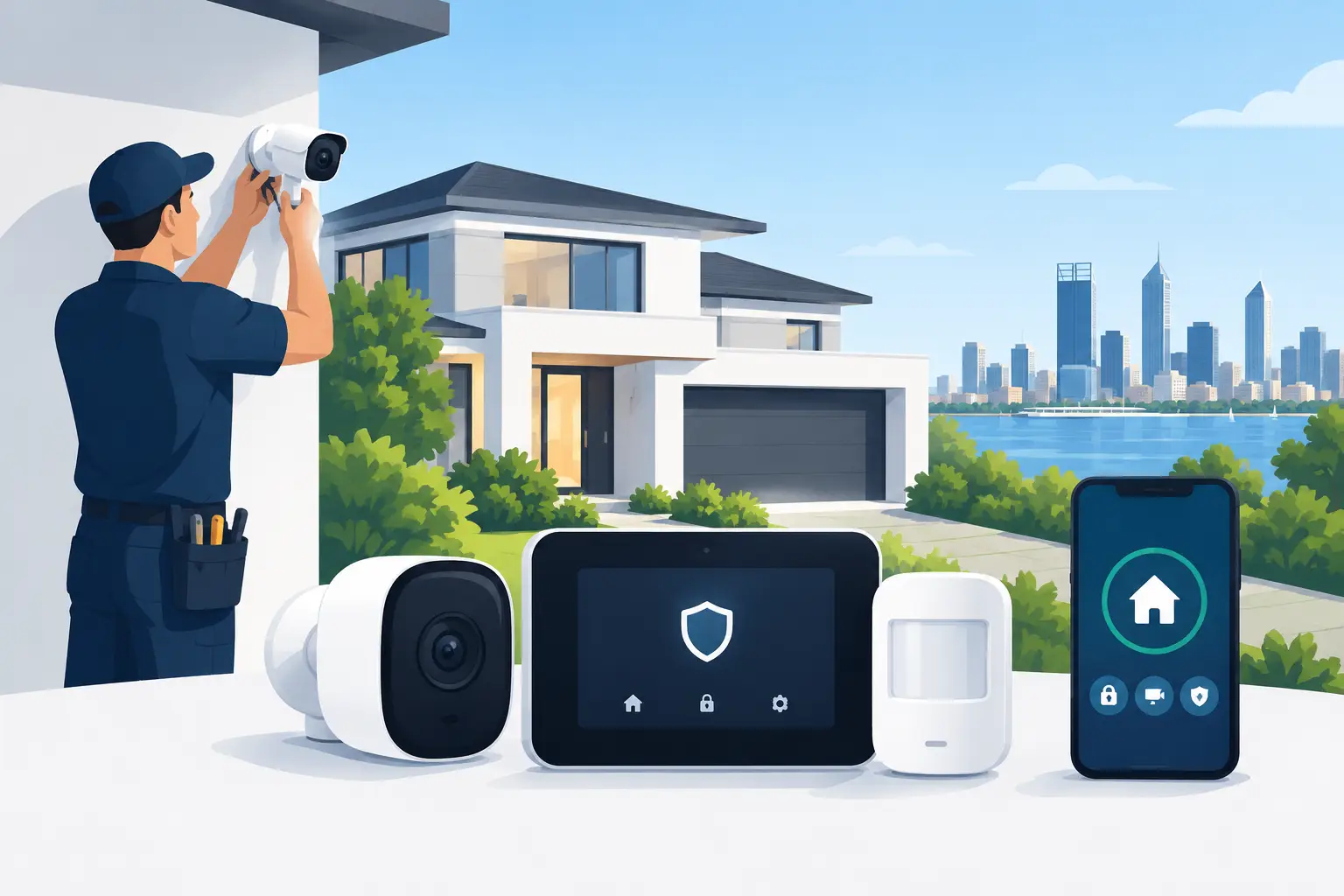
Residential Security System Installation in Perth
A front gate left open during school pick-up, a parcel sitting on the porch, or a side gate hidden from the street can create the uncertainty homeowners want to avoid. A professionally planned residential security system installation gives you clear visibility of your property, practical warning when something is wrong, and a system your household can use confidently every day.
The right setup is not necessarily the one with the most cameras or the loudest alarm. It is the one designed around how your home is laid out, where people enter, what needs protecting, and how you want to receive alerts. For Perth households, that also means choosing equipment and installation methods suited to heat, dust, coastal conditions and the way Australian homes are commonly built.
Start with the property, not the product
Security works best when it responds to real risks rather than a standard package. A technician should begin by walking the property with you and discussing your routines. Do family members arrive home at different times? Is there a rear laneway, a pool area, a detached garage, a shed with valuable tools, or a side path that cannot be seen from inside?
This assessment identifies likely entry points and blind spots. Ground-floor windows, sliding doors, garage access and poorly lit side boundaries are common priorities. The goal is not to make your home feel restrictive. It is to create layers of deterrence, detection and evidence while keeping daily access simple.
A home with a clear front boundary and a small footprint may need only a carefully positioned camera, a reliable alarm panel and sensors at key entry points. A larger block with multiple outbuildings may benefit from broader camera coverage, perimeter detection and an intercom at the gate. It depends on the site and your priorities.
What a tailored home system can include
Most residential systems combine a few complementary technologies. CCTV provides live viewing and recorded footage. An intrusion alarm detects unauthorised entry. Video intercoms let you confirm who is at the door or gate before granting access. Security lighting can support camera visibility and make concealed areas less appealing after dark.
Access control is also becoming useful in homes, particularly where owners want to manage gate access, short-stay visitors, cleaners or trades without handing out physical keys. It is not essential for every household, but it can be a practical addition where key management has become inconvenient.
The important question is how each component works together. A camera alone may record an event, but an alarm can alert you while it is occurring. An intercom can prevent an unwanted person from entering the property in the first place. A well-designed system gives each device a clear role.
Choosing cameras that capture useful evidence
Camera quality is about more than resolution. A poorly located high-resolution camera can still fail to capture a usable image if a face is backlit, obscured by a tree, or too far from the lens. Positioning, lighting, field of view and recording settings all affect the result.
Front entry coverage should generally capture a person approaching the door, rather than only the top of their head. Driveway cameras need to balance vehicle coverage with the ability to identify activity near the garage or front boundary. Side access cameras are often valuable because these areas are less visible from the street and may be used for discreet entry.
Night performance deserves close attention. Perth properties can have very dark side passages, while street-facing cameras may contend with headlights and strong contrast. Cameras with suitable low-light capability and correct placement help produce clearer footage when it matters. External equipment should also be selected and fitted to withstand local weather exposure.
Wireless cameras can suit some homes, particularly where cabling is difficult. However, wired systems are often the more dependable choice for permanent coverage because they avoid relying solely on Wi-Fi strength and battery charging. A professional can explain where wireless makes sense and where a cabled installation is the better long-term decision.
Designing an alarm people will actually use
An alarm is only effective if it is armed consistently. That is why ease of use matters as much as detection capability. Your system should suit the way your household comes and goes, including early work starts, school runs, pets and overnight routines.
Door and window contacts can protect selected entry points, while motion detectors cover internal areas such as hallways and living spaces. If pets move freely indoors, pet-aware detector selection and placement are essential to reduce false alarms. For homes with a garage connected to the house, that transition point should be considered carefully rather than treated as an afterthought.
Modern alarm systems can provide mobile notifications and allow authorised users to check the system status remotely. These functions are useful when you are travelling or cannot remember whether you armed the system. They should not replace sound installation practices, such as secure panel placement, reliable communication pathways and a properly tested backup power arrangement.
False alarms are frustrating for households and can lead people to stop using a system. Clear user instruction, correctly calibrated sensors and sensible zoning make a significant difference. For example, you may want the ability to arm downstairs areas overnight while family members move freely upstairs.
What happens during residential security system installation
A professional installation should feel organised, not disruptive. After the site assessment and quote are agreed, the installer confirms device locations, cable pathways, recording equipment position and how the system will be operated. This is the stage to raise practical concerns, such as preserving the appearance of a rendered wall, avoiding visible cabling or ensuring the recorder is not placed somewhere easily accessible.
On installation day, cabling is run as neatly and discreetly as the building allows. Cameras are mounted, sensors are positioned, and equipment is connected and configured. The technician should then test each component under realistic conditions: checking camera views in daylight and low light, confirming alarm zones, testing notifications and ensuring the app or control panel is straightforward to use.
A proper handover is part of the work, not an optional extra. You should know how to arm and disarm the alarm, view footage, respond to alerts, add or remove authorised users and contact support if something is not working as expected. Ask what recording retention you can expect, where footage is stored and whether your system can be expanded later.
Privacy, placement and household expectations
Security cameras should protect your home without unnecessarily recording areas beyond your property. Cameras aimed directly into a neighbour’s private space can create avoidable tension. During design, angles can often be adjusted to focus on your entrances, boundary line and assets while minimising irrelevant coverage.
It is also worth discussing who in the household can access footage and receive alerts. A clear approach prevents confusion, particularly in shared homes or where adult children, cleaners or property managers need limited access. Strong passwords, individual user accounts where available and regular software updates help protect the system itself from unauthorised access.
Maintenance keeps protection dependable
Security equipment is not fit-and-forget. Spider webs, dust, rain marks and garden growth can compromise a camera view. A sensor may need adjustment after renovations, new furniture or a change in how a room is used. Batteries, backup power, recording capacity and communications should be checked at appropriate intervals.
Homeowners can help by keeping camera lenses clean, trimming vegetation and reporting unusual behaviour promptly. Professional servicing adds a more thorough check of system health, device performance, footage quality and alarm operation. It is particularly worthwhile before an extended holiday, after storm damage, or when you have noticed missed notifications or unreliable recording.
When it is time to upgrade
An upgrade may be appropriate if your existing cameras produce unclear night footage, your alarm has recurring faults, your recorder no longer retains footage for long enough, or your home has changed. A new extension, solar installation, gate, pool area or detached workshop can alter the property’s security needs.
Upgrading does not always mean replacing every component. In some cases, selected cameras, a new recorder or a modern alarm communicator can improve the system significantly. An experienced provider can assess what remains serviceable and recommend a practical path forward rather than replacing equipment unnecessarily.
For Perth homeowners, the value of professional design lies in knowing the system is built for your property and supported after it is installed. Securitec Security brings more than 30 years of experience to that process, with licensed and police-cleared technicians focused on workmanship, clear advice and reliable ongoing service.
The best time to plan security is before an incident forces a rushed decision. Walk around your property at night, notice the areas you cannot see clearly, and consider what would give your household genuine confidence when the front door closes.