Industrial Security Systems That Protect Perth Sites
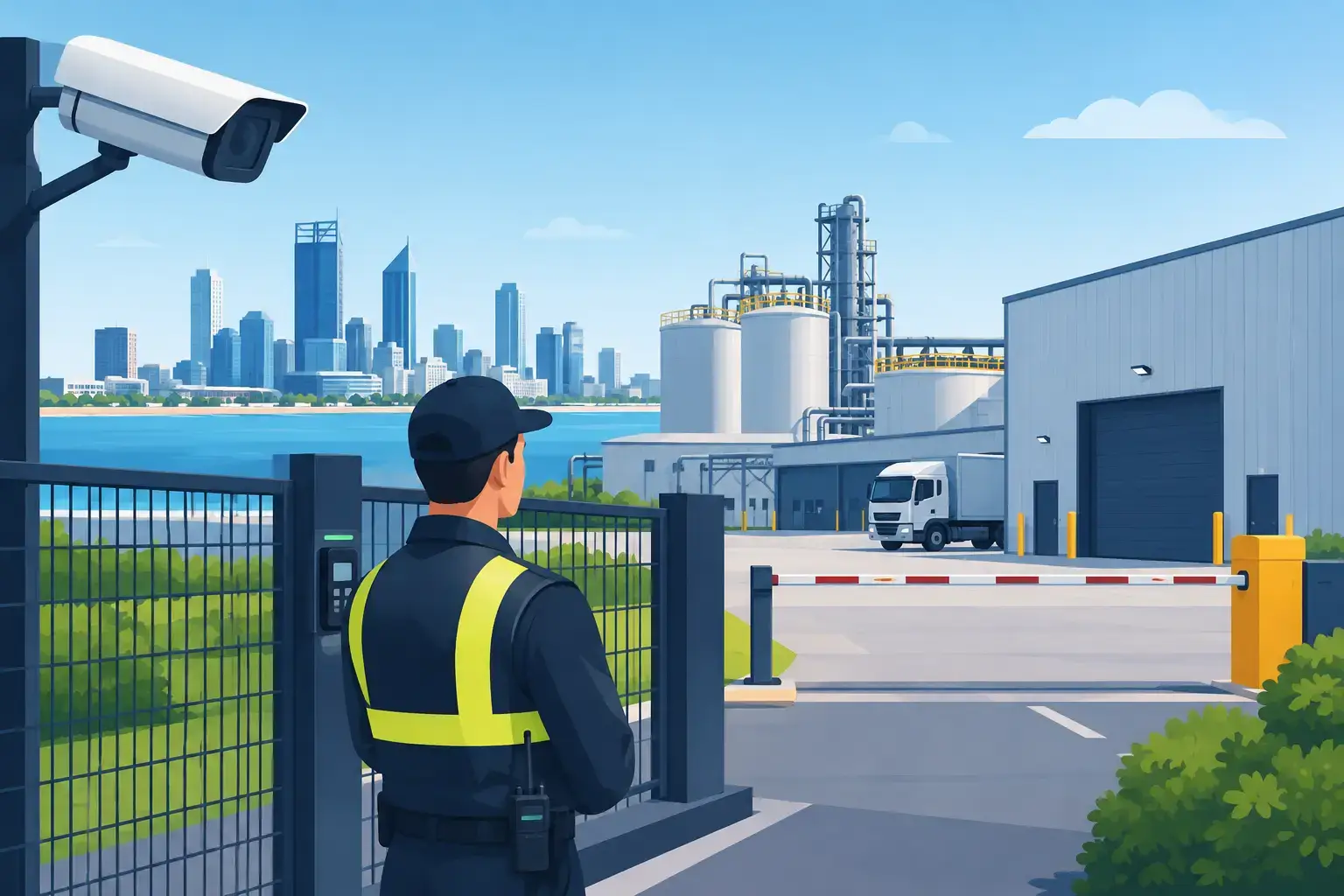
A warehouse roller door left unsecured after a late delivery, an unmonitored gate at the edge of a yard, or a shared key that never comes back can create far more risk than most operators expect. Industrial security systems give Perth facilities a practical way to control those weak points, protect high-value assets and know what has happened when a site is unattended.
For industrial operators, security is rarely about one device on one wall. It is about how people, vehicles, materials and contractors move through a working site. The most effective solution is tailored to the property’s layout, operating hours, risks and day-to-day routines – then installed and maintained so it remains dependable when it matters.
Why industrial sites need a different security approach
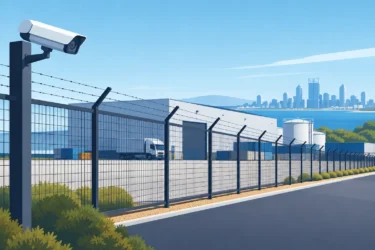
Industrial premises often cover more ground than a standard commercial tenancy and have more points of entry. There may be loading docks, workshops, storage compounds, plant rooms, staff parking, external stock areas and several gates. Some areas need to stay open during shifts, while others must remain restricted at all times.
That complexity can make simple, standalone security equipment inadequate. A single camera might record an incident, but it will not stop unauthorised access to a fuel cage. An alarm may detect a break-in, but it is more useful when it identifies the affected zone and works alongside video verification. Access control can replace unreliable keys, yet it needs the right door hardware and permissions to suit the people who use the site.
Perth conditions also influence system design. Heat, dust, salt air in coastal locations and exposure to sun can affect external equipment over time. Cameras require appropriate housings and placement, while outdoor cabling, gates and detection devices need to be selected for their environment rather than simply their purchase price.
The core parts of industrial security systems
A well-planned industrial security system usually combines several technologies. The exact mix depends on the site, but each component should solve a defined operational problem.
CCTV and video surveillance
CCTV provides visibility across entrances, perimeter lines, loading areas, high-value storage and internal workspaces. Camera placement matters as much as image quality. A camera mounted too high may show activity without capturing useful identification detail; one facing directly into harsh afternoon sun may produce inconsistent footage.
A professional design considers lighting, blind spots, likely approach routes, network capacity and how long footage needs to be retained. Coverage of cash handling, dispatch areas or safety-sensitive zones may call for greater detail than general perimeter monitoring. Remote viewing can also help authorised managers check a site from their mobile, but access to footage should be carefully controlled.
Access control for doors, gates and restricted areas
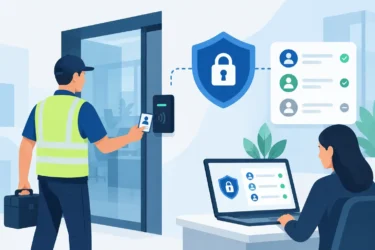
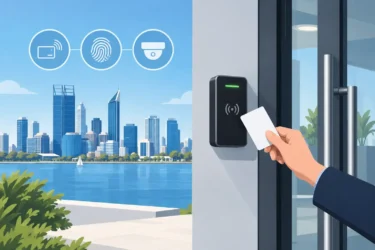
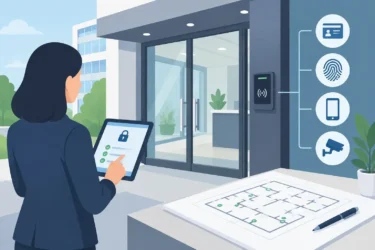
Mechanical keys are difficult to manage once a business has multiple employees, contractors or shifts. Access control allows authorised users to enter through cards, fobs, PINs or mobile credentials, while managers can set permissions by door, time or user group.
For example, a warehouse team may require access through a staff entry during rostered hours, while only selected supervisors can enter the server room, chemical store or plant enclosure. If a credential is lost or a staff member leaves, it can be removed from the system without changing every lock.
The right method depends on the site. Card access is familiar and cost-effective, while mobile credentials can reduce the number of physical passes to issue. For gates, vehicle access may need to work with intercoms, remote controls or approved visitor procedures. Convenience should never override a secure process for issuing and cancelling access.
Intrusion alarms and detection
An alarm system is designed to detect unauthorised entry when the site or a particular area is armed. It may include door contacts, motion detectors, glass-break detection, roller-door monitoring and external detection where suitable. Zoned programming is particularly useful for industrial properties because it allows a manager to secure an office or store room while other parts of the facility are still in use.
False alarms are disruptive and can lead staff to lose confidence in the system. Good design reduces this risk by choosing suitable detectors, positioning them away from likely environmental triggers and programming the system around real operating patterns. Staff also need straightforward instructions for arming, disarming and responding to alerts.
Intercoms and visitor management
A gate or front entry is a decision point: who is requesting access, why are they there and who can approve entry? Video intercoms give staff a clearer way to manage deliveries, trades and unexpected visitors without automatically opening a door or gate.
On a busy site, an intercom can be part of a wider visitor process rather than a replacement for one. Delivery drivers may need a designated entry route, induction requirements or a contact person before access is granted. Technology supports these procedures; it cannot correct unclear responsibilities on its own.
Design around risk, not a product catalogue
Before selecting equipment, map the way the facility operates. Identify the assets that would cause the greatest financial or operational damage if stolen, damaged or accessed without authority. Consider when the site is quiet, where visibility is poor, which doors are routinely propped open and whether contractors or transport drivers need temporary access.
A useful assessment also considers what happens after an event. If footage is needed to investigate damage, can the relevant camera capture usable images? If an alarm activates after hours, who receives the notification and what is their response process? If an access card is lost, can it be cancelled promptly?
This approach often reveals that not every area needs the same level of security. A general yard may need broad camera coverage and well-managed gates, while a high-value parts cage may require detailed CCTV, restricted access and alarm protection. Directing the budget towards genuine risk usually produces a better result than spreading low-level equipment across the entire property.
Integration gives site managers better control
When CCTV, access control, alarms and intercoms are planned together, they can support a clearer picture of site activity. An access event at a restricted door can be checked against nearby video. An alarm from a particular zone can direct attention to the relevant cameras. A video intercom can help verify a visitor before a gate is released.
Integration should be useful, not complicated for its own sake. A small workshop may benefit from a simple, easy-to-manage system with a few well-positioned cameras and controlled access to one or two areas. A multi-site operator may need central user management, consistent reporting and the ability to review several locations. The right level depends on the number of people, locations and processes being managed.
It is also sensible to plan for growth. Extra camera capacity, suitable network infrastructure and an access-control platform that can accommodate additional doors may cost more at the outset, but can avoid a costly rebuild when the business expands. Conversely, paying for advanced features that no one will use is not good value.
Installation quality and maintenance protect the investment
Industrial security equipment works hard. Cameras collect dust, gates experience daily wear, batteries age and site changes can leave old coverage plans outdated. Installation quality affects reliability from the beginning: cabling should be protected, equipment securely mounted, power and network requirements properly addressed, and users trained on the system.
Ongoing servicing is equally important. Regular maintenance can identify obscured camera views, failing batteries, damaged conduits, unstable connections and access devices that are no longer operating as intended. It is also the right time to check whether user permissions remain current and whether site operations have changed since installation.
For sites with high consequences of downtime, keep records of servicing, faults and repairs. This gives managers a clearer picture of system condition and helps prioritise upgrades before a failure creates a security gap. Securitec Security provides this full-lifecycle support, from tailored design and installation through to repairs, servicing and system maintenance.
Give people a system they can use correctly
Even well-designed technology can be undermined by rushed routines. Staff should know how to report a lost access credential, avoid sharing PINs, confirm doors are secure and escalate suspicious activity. Managers need a clear process for adding and removing users, reviewing footage and responding to system alerts.
Keep these procedures proportionate. If security steps are too difficult during a busy dispatch period, people will find workarounds. Practical processes, supported by reliable equipment and clear training, are more likely to be followed consistently.
A site assessment is a sensible starting point for any industrial facility that has outgrown keys, isolated cameras or an ageing alarm. The goal is not more technology for its own sake, but a security environment that fits the site, supports the people working there and remains dependable long after installation.