CCTV Privacy Laws for Perth Homes and Businesses
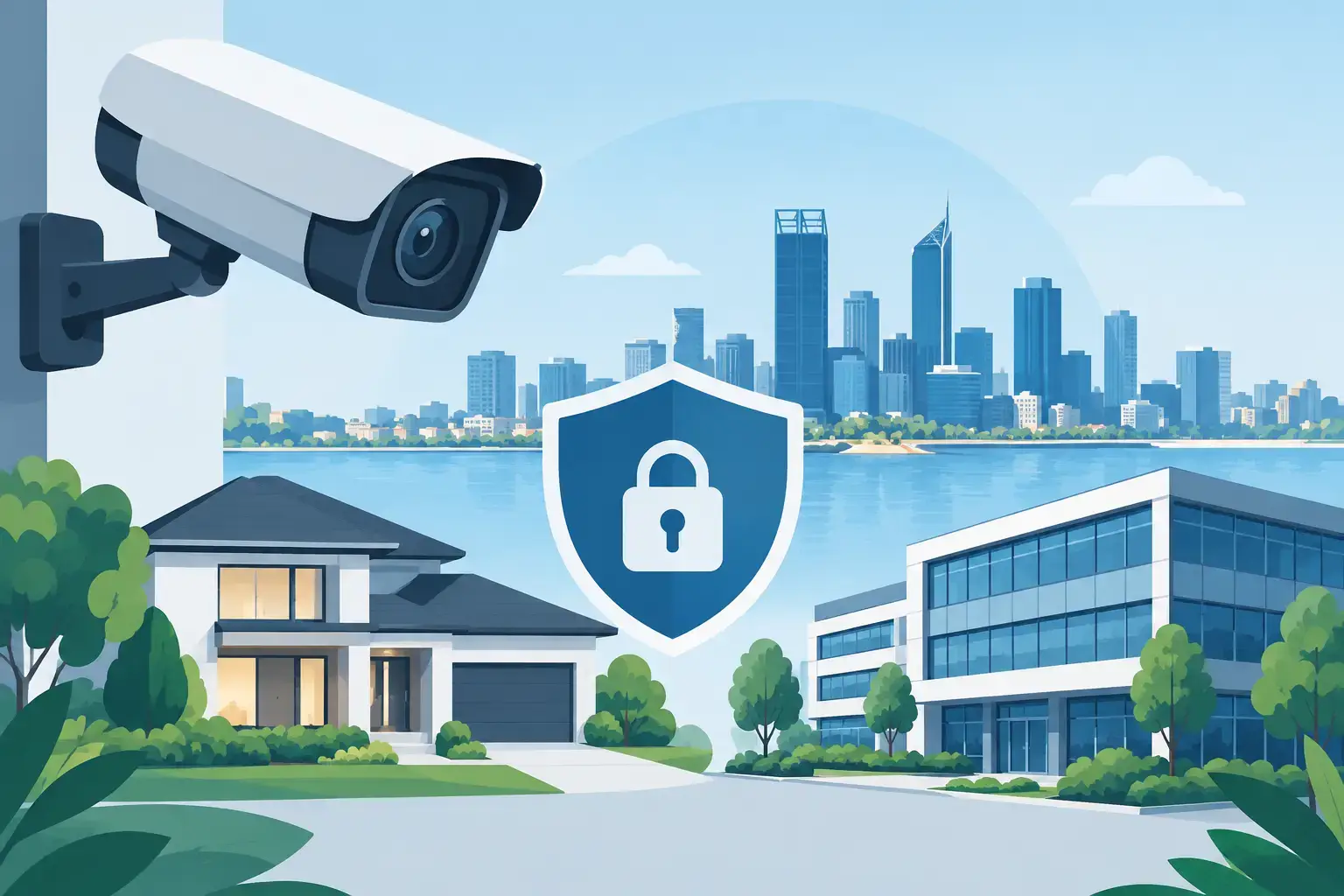
A security camera can deter opportunistic theft, clarify an incident and help protect the people and assets that matter to you. But CCTV privacy laws set clear limits on where cameras can point, what they can capture and how recorded footage is handled. For Perth homeowners and businesses, getting those details right is part of running a responsible security system.
A well-designed CCTV system should provide useful coverage without unnecessarily monitoring neighbours, staff, visitors or the public. The right approach is practical: identify the security risk, position cameras for that purpose, limit access to footage and be particularly cautious with audio.
CCTV privacy laws in Western Australia
There is no single rulebook for every camera installation. In Western Australia, the Surveillance Devices Act 1998 is central to the use of surveillance devices, including cameras and listening devices. Commonwealth privacy law can also apply when an organisation collects and manages identifiable video footage.
The key legal question is often whether a camera is recording a private activity. In broad terms, an activity may be private where those involved could reasonably expect not to be observed. A camera covering your own front entry, driveway, loading bay or shop counter is generally easier to justify than one aimed through a neighbour’s window, into a staff change room or across a private courtyard.
Purpose matters as much as placement. Cameras should be installed to protect a legitimate area of concern, such as entrances, stock areas, car parks, perimeter gates or cash handling points. Capturing more than is needed can create privacy risks without improving security.
For many organisations, recorded images are personal information when people can be reasonably identified. Businesses covered by the Privacy Act 1988, including many organisations with an annual turnover above $3 million, need to consider the Australian Privacy Principles. This includes collecting footage only where reasonably necessary, being open about the collection, protecting it from misuse and retaining it no longer than needed.
Small businesses may fall within the small business exemption under the Privacy Act, but that does not give them a free pass to record people however they wish. Other laws, contractual duties, workplace obligations and community expectations still apply. A camera system that is legal on paper can still damage trust if people feel they have been watched without good reason.
Camera placement: protect your property, respect boundaries
For residential CCTV, the simplest rule is to frame the camera around your own property. A front-door camera can capture the path, driveway and street frontage needed to identify visitors or vehicle activity. It should not be deliberately positioned to watch a neighbour’s living area, bedroom window or backyard.
Some incidental capture of public space or an adjoining property can be difficult to avoid, particularly on narrow Perth blocks or in townhouse developments. That is not automatically a problem. The practical test is whether your setup is reasonably directed at protecting your property rather than monitoring someone else’s private life.
Adjusting the field of view can make a major difference. Modern cameras often allow privacy masking, activity zones and tighter detection areas. These settings can block out a neighbour’s window, reduce irrelevant alerts and ensure footage is focused on the gate, entry or boundary that actually needs protection.
Commercial sites require the same discipline at a larger scale. Cameras in a reception area, warehouse, trade counter, car park or building entrance are often sensible security measures. Cameras in toilets, showers, changing areas, lactation rooms or other spaces where privacy is expected are not appropriate. Any concern about staff conduct should be handled through lawful workplace processes, not intrusive camera placement.
Strata properties add another consideration. If cameras cover common property, the owners corporation may need to approve the installation or establish rules for access, use and retention. A resident should not assume they can install equipment on common areas, building façades or shared accessways without permission.
Audio recording deserves extra caution
Audio is where many otherwise sensible CCTV installations become problematic. A camera with a built-in microphone may be capable of recording conversations that people reasonably expect to remain private. Under WA surveillance device laws, recording a private conversation using a listening device can be unlawful unless an exception applies.
For most home and business security systems, audio is not necessary. Clear video, properly placed cameras, good lighting and reliable recording will usually provide the evidence needed after an incident. Disabling audio recording is often the safest and most straightforward option.
If you believe audio is genuinely required for a particular operational reason, obtain legal advice before enabling it. Do not rely on a camera’s factory settings or assume that visible signage alone permits all forms of audio recording.
Tell people when CCTV is operating
Visible signage is a sensible part of responsible surveillance. It helps deter theft and vandalism, lets visitors and staff know cameras are in use, and supports transparency around how a premises is monitored.
For a business, signs should be clear, placed before or at the point people enter the monitored area, and easy to read. They do not need to reveal every camera location, but they should make the presence of CCTV obvious. A brief privacy notice can also explain why footage is collected, who may access it and how people can make an enquiry.
At home, signage is not always legally required, but it can be useful where cameras cover driveways, shared accessways or a visible frontage. The goal is not to create alarm. It is to make your security arrangements clear and avoid misunderstandings with visitors or neighbours.
CCTV privacy laws for workplaces
Employers have legitimate reasons to use CCTV. Cameras can help prevent theft, investigate incidents, monitor restricted areas, protect lone workers and provide evidence after a break-in or safety event. However, employee monitoring should be proportionate, transparent and connected to a genuine business purpose.
Before installing workplace cameras, consider what problem they are intended to solve. A camera over a cash register may be justified where cash handling is a known risk. Continuous close-up monitoring of a staff member’s desk may be difficult to justify unless there is a specific and lawful reason.
Staff should be told where cameras operate, why they are used and who can view recordings. This information can sit within a CCTV policy, employment documentation or workplace induction materials. Businesses should also consider awards, enterprise agreements, contracts and workplace health and safety obligations that may affect how monitoring is introduced.
Covert surveillance is particularly high risk. It should never be treated as a convenient way to avoid an uncomfortable management conversation. There may be narrow circumstances where covert monitoring is considered, but it requires careful legal advice and a clear evidentiary basis.
Handle footage like a security record
A camera system is only as responsible as the way its footage is managed. Limit access to authorised people who genuinely need it, such as an owner, site manager, security manager or appointed investigator. Give each authorised user their own login where possible, rather than sharing a single password across the team.
Footage should be protected with strong passwords, current firmware, secure network settings and sensible user permissions. Cloud access can be highly useful for multi-site operations, but it should be configured with the same care as on-site recorders. An exposed recorder or poorly secured remote login can turn a protective system into a privacy and cybersecurity risk.
Set a retention period that matches the reason footage is held. There is no universal number of days that suits every site. A small retail store may need enough time to identify and report an incident, while a high-risk industrial facility may have stronger operational reasons for longer retention. Keep footage longer where it is needed for an active investigation, insurance matter or legal requirement, then delete it securely when it is no longer required.
Be careful when sharing recordings. Footage may be provided to police, insurers or legal advisers where appropriate. Posting identifiable video on social media to identify a suspected offender is far more risky. It can expose a homeowner or business to complaints, reputational damage or allegations if the person has been wrongly identified. Seek advice before publishing footage outside a controlled investigation.
Design privacy into the system from day one
Privacy is easiest to manage before the cameras are mounted. Start with a site assessment that identifies vulnerable entry points, asset areas, blind spots and the people likely to be captured. Then select camera locations, lenses and recording settings that achieve security coverage without excessive collection.
For homes, that may mean a focused front-entry camera and a driveway camera with privacy masking. For a commercial premises, it may mean coverage at access points, tills, stock rooms and external gates, backed by a documented access process and retention schedule. Each system should reflect the site, the risks and the people using it.
Securitec Security can help Perth property owners plan CCTV coverage that is effective, practical and respectful of privacy. Where legal interpretation is needed, speak with a qualified legal professional. Good security should give you complete peace of mind, not leave you wondering whether the camera was pointed in the wrong direction.