Alarm Monitoring Review for Perth Properties

A siren can make a serious amount of noise, but noise alone does not tell you what is happening at your property at 2.00 am. A proper alarm monitoring review looks beyond the control panel and sensors to assess who receives an alarm signal, what they do next, and whether the system will perform when it is needed.
For Perth homeowners, that may mean knowing a verified alarm event will not be missed while the family is away. For business owners and site managers, it can mean having a documented escalation process that protects stock, equipment, staff areas and multiple locations after hours. The right arrangement depends on the property, the risks involved and the level of response required.
What alarm monitoring actually does
An intrusion alarm detects an event such as a door opening, glass breakage, motion in a protected area, tampering with equipment or loss of communication. Monitoring is the process of sending that event to a control room or nominated recipient so it can be assessed and acted on.
This distinction matters. An alarm system can be professionally installed and still have limited value if notifications only go to one mobile, the system has unreliable communications, or no one knows which alarms deserve an urgent response. Monitoring gives the alarm a clear pathway after activation.
Depending on the selected service, an operator may follow agreed instructions, contact keyholders, arrange a patrol response where available, or notify emergency services when the circumstances and applicable protocols warrant it. Monitoring is not a guarantee that an intruder will be stopped, and it does not replace sensible physical security. It does, however, reduce the chance that an alarm activation goes unseen or becomes confused during a stressful situation.
Alarm monitoring review: the points that matter
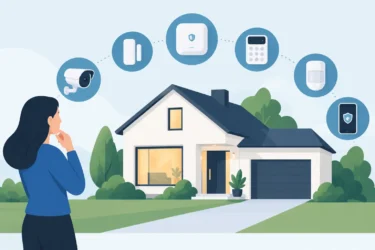
A useful review starts with the property rather than a standard package. A small home, a medical practice, a warehouse and a multi-site operation have different operating hours, access points, exposure to false alarms and obligations to staff.
How alarm signals are sent
The communication path is fundamental. Older systems may rely on a phone line, while modern alarm communicators commonly use mobile networks, IP connections or a combination of paths. A dual-path arrangement can provide added protection if one communication method fails, but it may not be necessary for every residence.
Ask what happens during an internet outage, a power failure or attempted tampering. A quality system should have battery backup and should report relevant faults, not simply report an intrusion. For remote industrial or regional locations, mobile signal strength and the placement of equipment need careful consideration before installation.
The response plan behind the alarm
The response plan should be clear enough that a new manager or family member can understand it. Confirm who is called first, second and third; what occurs when a keyholder cannot be reached; and how changes to contacts are made. For commercial sites, consider whether different events need different instructions. An alarm on a rear storeroom door may require a different response from a duress alarm, an access-control fault or a fire-related signal.
Keyholder details are often overlooked. Out-of-date mobile numbers, former employees and unclear authority levels can delay a response at the exact moment a decision is needed. Review contact lists regularly, particularly after staff changes, tenancy changes or holidays.
False alarms and verification
False alarms cost time and can create complacency. They are commonly caused by pets, poor sensor positioning, unsecured doors, insects, ageing batteries, staff error or a system that has not been maintained. The answer is not to ignore alarm events. It is to identify why they are occurring and correct the underlying cause.
Alarm verification can help provide useful context before action is taken. This might include reviewing activity across zones, checking compatible camera footage, or following a defined call procedure. The appropriate method depends on the site and the monitoring arrangement. Video verification can be particularly valuable for commercial premises, but camera placement, lighting, privacy and recording retention all need to be considered as part of the wider design.
Costs should be transparent
Monitoring involves an ongoing fee, but the lowest monthly price is rarely the whole comparison. Check the initial setup cost, communicator hardware, contract terms, call-out charges, patrol attendance charges, administration fees for updating contacts and costs associated with testing or repairs.
A lower-cost service with a single communication path may suit a low-risk home where owners are usually nearby. A business storing high-value assets, operating late or managing several sites may justify more resilience, tailored escalation and integrated CCTV. The sensible choice is the one that matches the consequence of an undetected event, not simply the one with the longest feature list.
Monitoring works best as part of a maintained system
A monitored alarm is only as dependable as its components. Sensors need to be correctly positioned and tested. Batteries have a service life. Doors, roller shutters and windows can shift over time. Network equipment may be replaced without anyone considering its impact on the alarm communicator.
Regular servicing identifies these issues before they become failures. It also provides an opportunity to test panic buttons, backup power, communications and the way signals are received. For commercial and industrial properties, maintenance records can support internal risk controls and demonstrate that security equipment is being managed responsibly.
If a system produces repeated faults or false alarms, arrange an inspection rather than repeatedly bypassing zones. Bypassed devices can leave a gap in protection, especially when the person who enabled the bypass is no longer on site to explain it.
Questions to ask before choosing a provider
Before committing to alarm monitoring, ask for practical answers to the following questions:
- Which alarm events are monitored, and which events will generate a notification?
- What communication paths are included, and what happens if one path fails?
- Is the system compatible with my existing panel, sensors, cameras and access control?
- What is the escalation procedure after hours, and can it be tailored to our site?
- How are false alarms managed, and are verification options available?
- What ongoing maintenance, fault repair and technical support are available locally?
These questions reveal whether the provider understands the complete security environment or is only supplying a subscription. They also make it easier to compare proposals on service quality, system resilience and accountability.
When integrated security adds value
Alarm monitoring becomes more useful when it works with the other systems already protecting a site. CCTV can help identify activity around an alarm event. Access control can show whether an authorised user entered at a particular time. Intercom records may provide additional context at shared commercial premises.
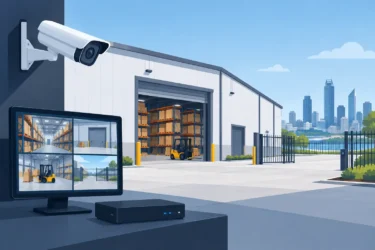
Integration should be purposeful, not technology for its own sake. A homeowner may simply need a straightforward alarm with reliable notifications and easy daily operation. A Perth business with a warehouse, office and yard may need alarm zones, cameras, gates and staff access managed as one coordinated security plan. In that environment, a single provider that can design, install, service and repair the system can reduce gaps between trades and make fault resolution more straightforward.
Securitec Security approaches alarm systems as long-term security infrastructure, with tailored design and ongoing support rather than a one-size-fits-all retail product. That approach is especially relevant when an existing system needs upgrading without disrupting business operations.
A practical decision for homes and businesses
The best alarm monitoring arrangement is not necessarily the most complex one. It is the arrangement that has reliable communications, sensible escalation instructions, maintained equipment and a support team that can explain the system in plain language.
Take the time to test your current alarm, check who receives notifications and confirm that your contact details are current. A few well-considered checks now can make the difference between an alarm that merely sounds and a security system that is ready to support the people and property relying on it.