Smart Locks for Perth Homes and Businesses
A spare key hidden near the meter box, a key held by a former employee, or a tradie needing access while nobody is on site can create more risk than most people realise. Smart locks replace uncertainty with controlled entry: you decide who can enter, when they can enter, and in many cases, review a record of when the door was used.
For Perth homes and businesses, smart locks are not simply a convenience upgrade. When selected and installed correctly, they can reduce key-management issues, strengthen access control and make day-to-day security easier to manage without adding complexity for the people using the premises.
What smart locks actually do
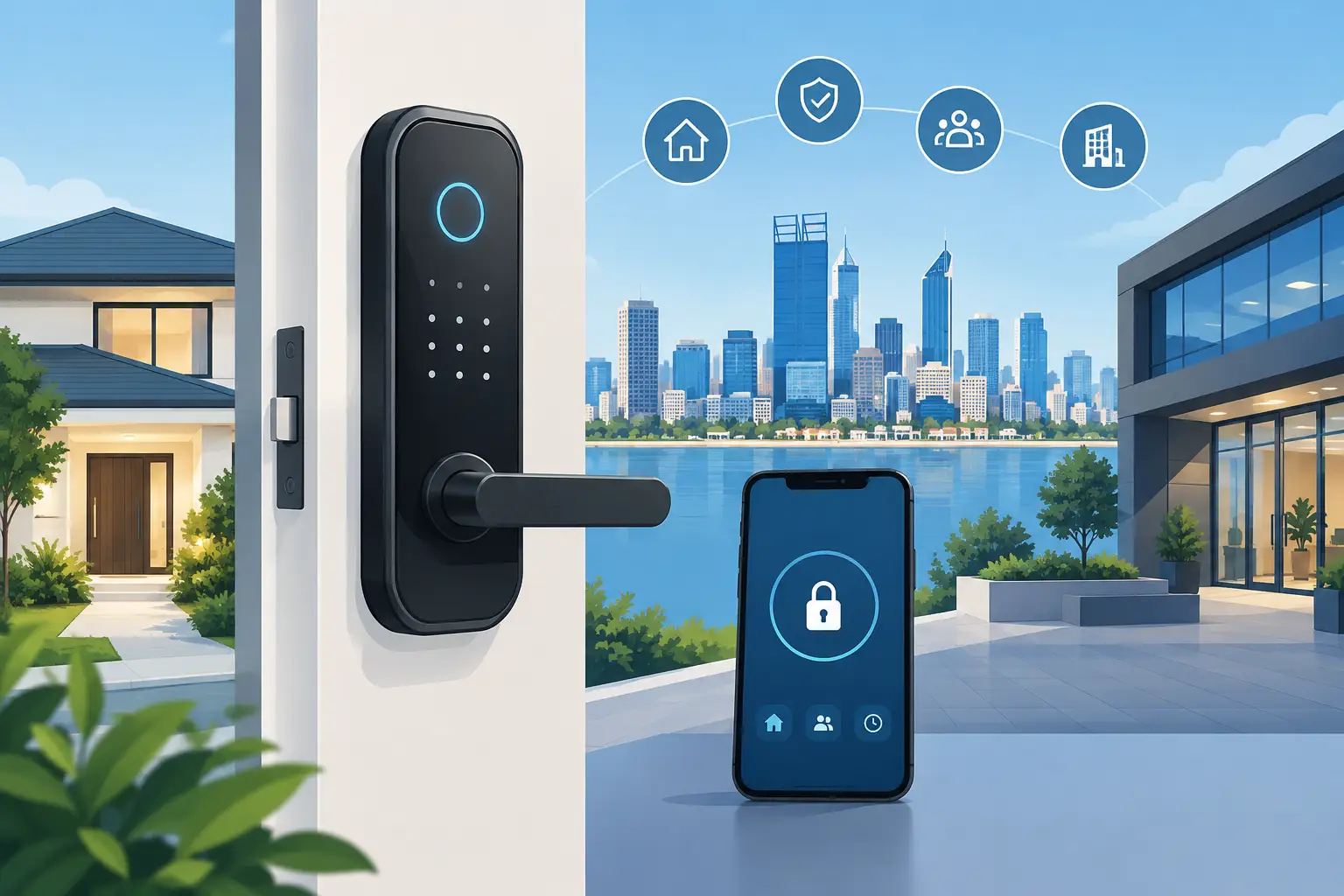
A smart lock is an electronic locking device that allows authorised access without relying only on a traditional mechanical key. Depending on the system, users may enter with a PIN code, access card, fob, mobile credential, fingerprint or remote release from an approved device. Many systems retain a mechanical override key or an alternative power option, which is useful if the battery needs replacement or electronic access is unavailable.
The useful difference is administration. A physical key can be copied, misplaced or retained after it should have been returned. Electronic credentials can usually be added, changed or removed promptly. For a household, that may mean giving a cleaner a code that works only on Friday mornings. For a business, it can mean removing a departing staff member’s access without rekeying every external door.
Not every smart lock offers the same functions. Some are designed as straightforward keypad locks for a single home door. Others are part of a broader access-control system, with door schedules, user groups, audit trails and central administration across multiple locations. The right choice depends on the door, the users and the level of accountability required.
Where smart locks make the biggest difference
At home, smart locks suit households that regularly coordinate access for family members, older children, cleaners, dog walkers or tradespeople. A parent can avoid the concern of a child losing a house key, while still keeping an emergency mechanical option available. They are also practical for side gates, offices, storerooms and granny flats, provided the hardware is appropriate for the door and exposure to weather.
For small businesses, the most immediate benefit is usually replacing the shared staff key. Instead of changing locks whenever a key goes missing or employment changes, an authorised manager can update individual access credentials. This can be particularly valuable for salons, medical practices, retail stores, workshops and professional offices where early starts, deliveries and contractors are common.
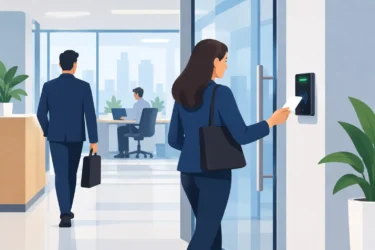
Commercial and industrial sites often need more than one smart lock. Access control can be designed around staff roles, operating hours and areas of responsibility. Reception staff may have access to offices during business hours, warehouse staff to loading areas, and managers to secure rooms at all times. When connected with CCTV, intrusion alarms and intercoms, the result is a clearer picture of who entered an area and when.
That does not mean every door needs electronic hardware. A low-risk internal cupboard may be adequately protected with a quality mechanical lock. Security works best when the solution matches the risk, rather than adding technology for its own sake.
Choosing the right smart lock for your door
The lock itself is only one part of the decision. Before selecting a model, assess the door construction, frame, existing lock preparation, handing, traffic levels and whether the door is exposed to rain, heat, dust or coastal air. Perth conditions can be demanding, particularly for external doors near the coast or high-use commercial entrances.
A residential front door may suit a battery-powered keypad deadbolt with a key override and app-based administration. A glass shopfront, metal gate or fire-rated commercial door requires a different approach. It may need an electric strike, electric mortice lock, magnetic lock or other compatible access-control hardware. Hardware must also suit the existing door closer and latch arrangement so the door closes and secures reliably after every use.
Convenience features versus security requirements
Mobile access is convenient, but it should not be the only way to operate an important entry point. Consider what happens if a phone is flat, a user changes mobiles, or the internet service is interrupted. A good system provides sensible fallback methods and does not leave authorised people stranded outside.
Audit trails are valuable where access needs to be accountable. A home may only need simple event history, while a commercial operation may require reports that show which credential was used at a particular door. If several sites are involved, centralised management can save considerable administration time, but it also requires clear processes for adding and removing users.
Remote access should be configured carefully. Use unique administrator credentials, strong passwords and multi-factor authentication where available. Keep the lock firmware and associated app current, and remove former users rather than leaving old accounts active. Cybersecurity is part of physical security when a door can be managed electronically.
Installation is where reliability is decided
A smart lock cannot compensate for a poorly aligned door, a weak strike plate or a frame that has shifted over time. Before fitting electronic hardware, the door should close freely, latch correctly and provide a secure fixing point. If the latch does not align consistently, users may force the door or find that it appears closed without properly securing.
Professional installation also considers the way people leave a building. For commercial premises, doors on emergency exit paths must allow safe egress and meet relevant building, fire and safety requirements. A lock that restricts entry may be appropriate, but it must not prevent people from leaving safely in an emergency. This is a design issue, not a detail to address after hardware has been purchased.
Power planning matters too. Battery-operated locks need a clear maintenance routine, while wired devices require suitable cabling, power supply and backup arrangements. At larger sites, access control should be considered alongside the alarm system, intercom, CCTV coverage and network infrastructure. Installing these elements as one considered system avoids duplicated work and makes future expansion more straightforward.
Common mistakes to avoid
The most common mistake is choosing a consumer product based only on its app features. A lock can have an impressive app and still be unsuitable for a heavy commercial door, an exposed gate or a high-security area. The physical quality of the door, lock case, cylinder, strike and fixings remains essential.
Another issue is sharing one code among everyone. This may be convenient initially, but it removes individual accountability and makes access changes harder. Separate credentials for each regular user provide better control, especially for staff, contractors and service providers.
It is also unwise to treat smart access as a set-and-forget installation. Batteries need checking, credentials need reviewing, and mechanical components still benefit from inspection and adjustment. If a lock begins sticking, beeping unusually or failing to latch consistently, address it early rather than waiting for a lockout or security incident.
Building a system that can grow
A single smart lock can be a sensible first step, but many properties gain more value when it is planned as part of a wider security system. An intercom can verify visitors before remote release. CCTV can provide visual context for a door event. An intrusion alarm can protect the premises after hours, while access permissions support safer entry for staff opening or closing the site.
For multi-site businesses, consistency is especially useful. Similar credential rules, access schedules and servicing arrangements across each location make security easier to administer and audit. However, a standard approach should still allow for differences between a busy warehouse, a customer-facing office and a low-traffic storage facility.
Securitec Security designs access-control solutions around the way Perth properties actually operate, from straightforward residential entry to integrated commercial systems. With more than 30 years of experience, the focus is on dependable hardware, professional installation and support that continues after the system is commissioned.
The best smart lock is the one that gives authorised people simple access while making unauthorised entry harder, without creating a burden for the person responsible for the property. Start with the door, the people using it and the risks you need to manage, then choose technology that will remain reliable long after the novelty has worn off.