Are Security Cameras Legal in Western Australia?
A camera above the front door can provide useful evidence after a break-in. A camera aimed through a neighbour’s bathroom window can create a serious privacy problem. The difference matters when people ask, are security cameras legal in Western Australia?
For most homes, shops, offices and industrial sites, CCTV is lawful when it is installed for a genuine security purpose and used responsibly. But legality is not simply about owning the camera. Its location, field of view, audio settings, signage, who can access footage and how long recordings are kept can all affect whether your system is appropriate.
This is practical information for Perth property owners and managers, not legal advice. For a complex dispute, sensitive workplace matter or a camera that may capture private neighbouring areas, obtain advice specific to your circumstances.
Are security cameras legal in WA?
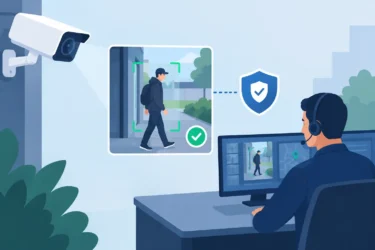
Generally, yes. Homeowners and businesses can use security cameras to protect people, premises and assets. CCTV is commonly used to deter intruders, investigate damage or theft, oversee entry points, improve safety in car parks and support incident reporting.
The key issue is whether the system captures people in circumstances where they reasonably expect privacy. Western Australia’s surveillance device laws can apply where a device is used to observe or record a private activity without the necessary consent or lawful authority. Privacy obligations may also arise for organisations covered by Commonwealth privacy law, particularly where footage identifies individuals.
A well-designed system therefore focuses on the risks you need to manage. At a home, that might mean doors, driveways, gates and vehicles. At a business, it may mean stock areas, cash handling points, loading docks, reception areas and perimeter access. The broader the view, the more carefully you need to consider privacy.
Point cameras at your property, not private areas
The simplest rule is also the most useful: position cameras to monitor your own property and avoid areas where others have a strong expectation of privacy.
A front-facing camera may incidentally capture part of a public footpath, road or neighbouring driveway. That is often difficult to avoid and can be reasonable where the primary purpose is securing your entrance or boundary. It becomes harder to justify if the camera is deliberately directed at a neighbour’s living space, backyard entertaining area, bedroom, bathroom, changing area or other private location.
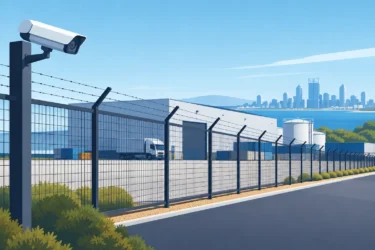
The same care applies in commercial settings. Cameras can be appropriate in public-facing retail areas, warehouses, common corridors and building entrances. They should not be placed in toilets, showers, change rooms or other spaces where privacy is expected. In staff break rooms, offices and similar areas, ask whether a camera is genuinely needed for security or whether a narrower view, restricted access system or alarm would achieve the objective with less intrusion.
Modern cameras make this easier to manage. Privacy masking can block a neighbouring window or adjoining property from the recorded image. Adjustable lenses, sensible mounting height and a site-specific camera plan can also reduce unnecessary capture without leaving a blind spot at the gate or entry point.
Audio recording requires extra care
Many security cameras have built-in microphones. That does not mean recording conversations is automatically appropriate.
Audio recording is more intrusive than video because it can capture the content of private conversations, including conversations between people who do not know they are being recorded. Western Australian laws regulating listening devices and private conversations can be stricter than the rules that apply to ordinary visual CCTV.
For that reason, audio should be disabled unless there is a clear, lawful operational need and you have checked the requirements that apply. If audio is necessary, make people aware of it and obtain tailored legal advice before activating it. A visible camera sign may assist with transparency, but a sign does not automatically make every recording lawful.
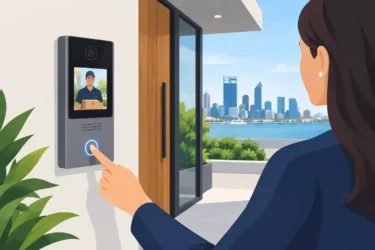
This is particularly relevant for businesses with video intercoms, reception cameras and remote monitoring systems. Before enabling sound, confirm exactly what the device records, whether audio is continuous or event-triggered, where recordings are stored and who can listen to them.
Workplace CCTV should be transparent and proportionate
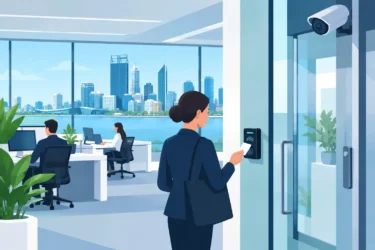
Employers have legitimate reasons to use CCTV. Cameras can help protect staff, visitors, stock, vehicles, confidential materials and restricted areas. They can also provide an objective record when an incident occurs.
However, employees should not discover a camera by accident. Clearly explain why cameras are being used, where they are located, whether audio is active, who may view recordings and how long footage is retained. Put the approach in a workplace policy and reinforce it during induction when appropriate.
Visible cameras and clear signage are usually the better path. Covert surveillance carries greater legal and employee-relations risk and should not be treated as a routine management tool. It may only be defensible in limited circumstances, such as a properly managed investigation into suspected serious misconduct, and should be considered with specialist advice.
A proportionate approach matters. A camera covering a warehouse dispatch area may be justified by stock loss and safety risks. Constantly filming a staff member at a desk because of a general performance concern is far less likely to be reasonable. CCTV is most effective when it is part of a defined security plan, not a substitute for fair management practices.
Signs help, but they are not a complete solution
CCTV signage is good practice for homes and businesses. It deters opportunistic offending, lets visitors know they may be recorded and demonstrates that surveillance is not being concealed.
For a commercial site, place signs where people can see them before entering the monitored area. At a home, a sign near the front boundary or entrance can be useful, although it should not reveal excessive detail about the security system.
Signage alone does not fix poor camera placement, unnecessary audio recording or unsafe footage handling. Think of it as one part of responsible operation, alongside sensible design, staff procedures and secure technology.
Keep footage secure and only for as long as needed
Recorded footage can identify customers, visitors, neighbours, contractors and employees. Treat it as sensitive security information.
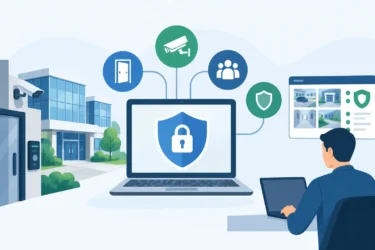
Restrict access to nominated people, use strong unique passwords, enable multi-factor authentication where available and keep camera software updated. Avoid sharing logins among staff. If footage is downloaded after an incident, record who accessed it and keep the copy secure.
Retention periods should suit the risk. A small home system may overwrite footage after a short period unless an incident occurs. A commercial site may need a longer period due to reporting processes, delivery cycles or contractual obligations. Keeping every recording indefinitely is rarely necessary and increases the consequences if an account is compromised.
Footage should also be shared carefully. Providing relevant material to police or an insurer after an incident may be appropriate. Posting identifiable clips of customers, neighbours or suspected offenders on social media can create avoidable legal and reputational risk. Preserve the original file, report the matter and seek appropriate guidance instead of trying to investigate it publicly.
Strata, rental and shared-property considerations
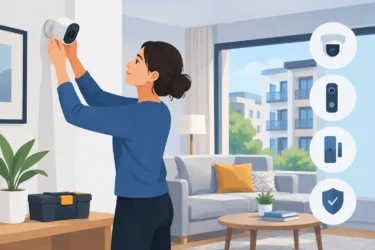
If you rent, do not assume you can install wired cameras, drill into external walls or run cables through common property without permission. Check your lease and speak with the owner or property manager. Wireless equipment can reduce installation impacts, but its viewing angle and privacy obligations still matter.
In apartments, townhouses and commercial complexes, strata or building rules may control changes to common property. A camera outside a unit door may capture a shared hallway and other residents’ movements. That does not automatically prohibit it, but it is a reason to check the relevant by-laws and agree on a sensible solution before installation.
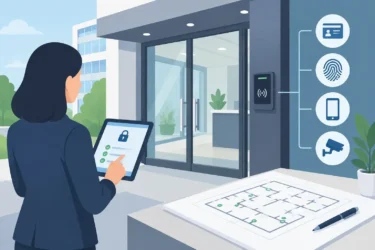
For larger sites, a centrally managed system can give authorised managers the coverage they need while applying consistent access permissions, retention settings and maintenance standards across buildings.
A practical CCTV check before installation
Before fitting a camera, be able to answer four questions: What specific risk is this camera addressing? Does its view stay focused on that risk? Could audio be disabled? Who will access footage and for how long?
If the answers are unclear, the design probably needs more work. A professional site assessment can identify coverage gaps, privacy concerns, lighting limitations and network requirements before equipment is mounted. This is often more cost-effective than relocating cameras after a complaint or discovering that a poorly positioned camera missed the incident it was meant to capture.
For Perth homes and businesses, Securitec Security can design CCTV around the way your property operates, from straightforward residential camera coverage to integrated multi-site security systems. The aim is practical protection that is easy to use, professionally installed and maintained over the long term.
Security cameras should give you confidence, not create a new problem. Keep their purpose clear, their view targeted and their recordings protected, and your system will be far more likely to support the people and property it is there to protect.