Best Cameras for Night Vision for Perth Properties
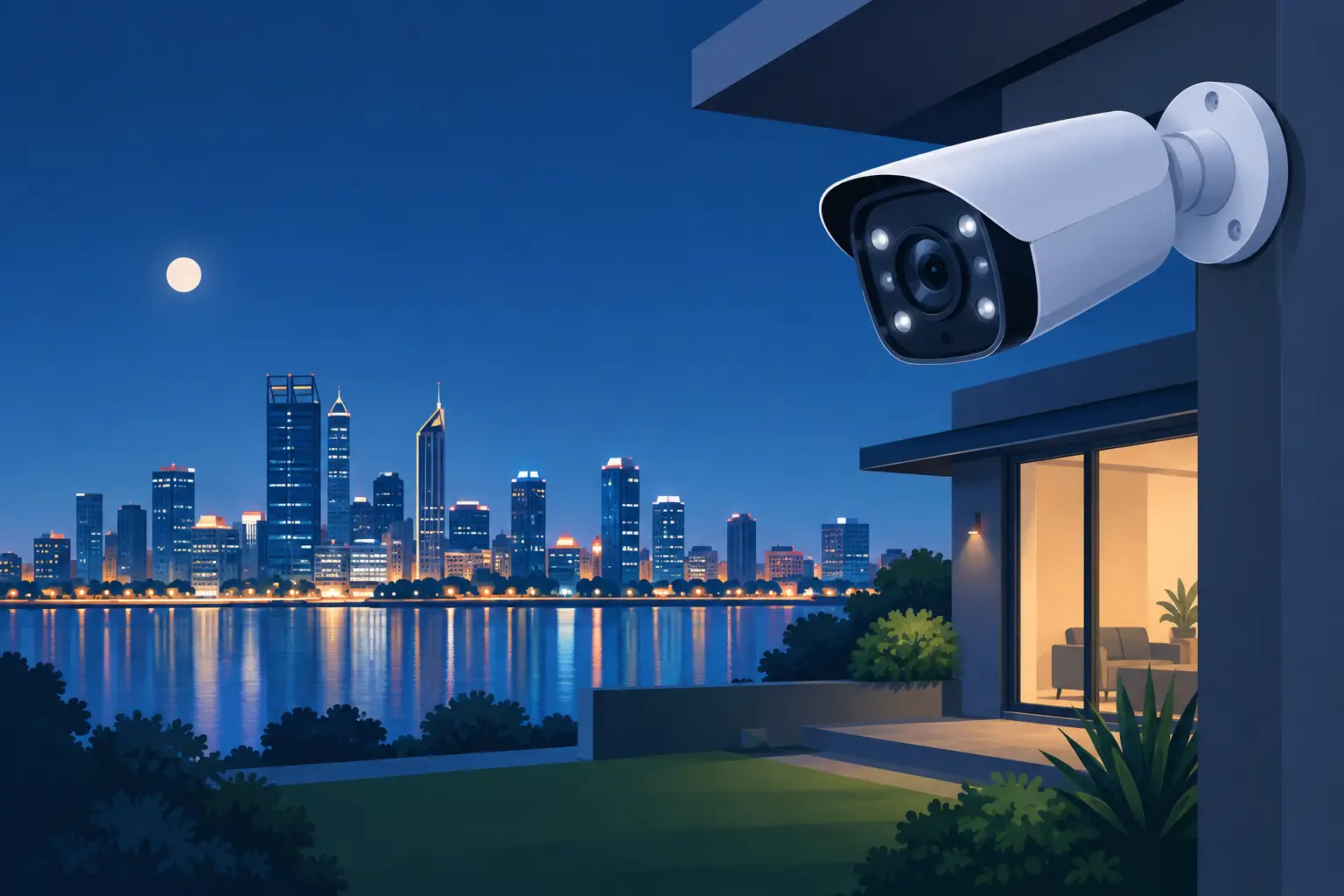
A camera that produces a clear picture at 2 pm can still be of little use when someone approaches a side gate at 2 am. The best cameras for night vision are not simply cameras with infrared LEDs. They are systems selected and positioned to identify what matters after dark: a face at the front door, a vehicle near the driveway, movement around stock, or an unauthorised person entering a restricted area.
For Perth homes and businesses, choosing the right night surveillance camera means balancing image detail, lighting conditions, coverage distance and the way the site is used. A bright camera light may suit a rear entry but be unsuitable near bedrooms or neighbouring properties. Infrared may be ideal for a dark perimeter, while colour footage can provide more useful evidence at a shopfront or car park.
What makes the best cameras for night vision?
The first consideration is not the advertised night-vision distance. It is whether the camera can capture usable identification at the distance you need. Detecting movement at 30 metres is different from recognising a person, reading clothing detail or capturing a number plate. The lens, sensor size, resolution, mounting height and available light all affect the result.
A quality low-light camera uses a larger, more sensitive image sensor to gather more light before switching into black-and-white infrared mode. This can retain colour images in low ambient light, such as a driveway with street lighting or a commercial entrance with signage lighting. Colour helps distinguish vehicles, clothing and other details that may be lost in monochrome footage.
Infrared, commonly called IR, remains a practical choice where there is very little light. The camera’s built-in IR illuminators project invisible light so the camera can see in darkness without adding visible glare. It is particularly effective for side access paths, fenced yards, sheds, warehouses and other areas where discreet coverage is preferred.
The strongest night-time systems often combine these approaches. A camera may operate in colour while there is usable ambient light, shift to black-and-white infrared as light falls, then activate a controlled white light when it detects a person. This provides sharper colour evidence when needed and can also deter an intruder.
The main night-vision camera options
Low-light colour cameras
Low-light colour cameras are a strong option for entries, driveways, reception areas and building frontages with some existing lighting. They make the most of streetlights, exterior fittings and nearby commercial lighting, often delivering a more natural image than conventional cameras after sunset.
Their trade-off is simple: complete darkness still requires illumination. If the area is completely unlit, the camera may switch to infrared or need a carefully designed supplementary light source. For residential properties, that lighting should be aimed and timed thoughtfully so it improves security without disturbing the household or neighbours.
Infrared cameras
Infrared cameras are the reliable workhorses of night surveillance. They can monitor dark spaces without relying on visible lighting, making them suitable for perimeter fences, rear yards, loading areas and storage compounds. A properly specified IR camera can provide consistent coverage night after night.
However, reflective surfaces can reduce image quality. White walls, roller doors, vehicle panels, rain and cobwebs close to the lens can bounce infrared light back into the camera, causing glare or haze. Installation quality matters as much as the camera specification. The camera needs the correct viewing angle, suitable mounting position and regular servicing to keep its lens and illuminators clear.
Active-deterrence cameras
Active-deterrence cameras combine monitoring with a visible response, such as a white light, warning message or siren. They are useful where an immediate prompt may discourage trespassers, including commercial yards, construction sites, driveways and high-value storage areas.
They are not right for every location. Frequent alerts from passing traffic, pets or pedestrians can become a nuisance, especially in built-up residential areas. Accurate detection settings and sensible activity zones are essential. The aim is a meaningful response to a genuine event, not a light or alarm reacting all night.
Thermal cameras
Thermal cameras detect heat rather than visible light. They can reveal people or vehicles through complete darkness and may perform well in challenging conditions where conventional imaging struggles. For large industrial sites, critical infrastructure or long fence lines, thermal detection can be highly effective.
Thermal footage is not normally the first choice for identifying a face or reading a number plate. It is best used as part of a layered solution, paired with visible-light cameras that provide evidentiary detail closer to access points. It is also a specialist investment, usually justified by a site’s risk profile and coverage requirements.
Features that matter more than a marketing label
Resolution is important, but more megapixels do not automatically produce better night footage. A high-resolution camera with a small sensor can create noise in low light. Look for a camera and lens combination designed for night performance, then ensure the recorded image is configured at an appropriate frame rate and bitrate. Over-compressed footage can turn a clear scene into unusable pixelation when an incident occurs.
A varifocal lens is valuable where the camera must cover a specific gate, laneway or entrance from a distance. It allows the installer to set the field of view precisely, rather than using a wide lens that captures plenty of area but too little identifying detail. Wide-angle cameras are useful for general awareness, but they should not be expected to identify someone at the far end of a large yard.
Wide dynamic range also deserves attention. At night, a person may be backlit by headlights, a security light or a brightly lit doorway. Cameras with effective dynamic range can hold more detail in both the bright and dark parts of the scene. This is especially relevant for car parks, driveways and business entrances.
For vehicle monitoring, number-plate capture is a separate requirement. Standard CCTV may show a vehicle entering a site but fail to read the plate because of speed, headlight glare or the camera angle. A dedicated plate-recognition camera, correctly positioned for one lane and expected vehicle speed, is often required where registration details are critical.
Design the system around the site, not the catalogue
Night vision starts with a site assessment. Walk the property after dark if possible. Note where people approach, where shadows form, which lights switch off, and where a person could move out of view. A camera placed above a garage may cover the driveway well but miss a side gate. A camera aimed across a yard may see movement but not provide a usable face image at the point of entry.
Consider the effect of Perth conditions too. Strong summer sun, dust, coastal salt air and seasonal rain all place demands on outdoor equipment and mounting hardware. Cameras should have suitable weather protection, protected cable routes and stable mounts that do not shift with wind or vibration. Regular cleaning and maintenance are particularly important where dust, insects or salt residue can interfere with night illumination.
Lighting should support the camera rather than compete with it. Avoid aiming bright lights directly at the lens. Position lighting to illuminate the subject area, not the camera. At commercial sites, controlled lighting around entries, loading zones and staff parking can improve both security footage and safe access for employees.
Matching night cameras to residential and commercial needs
A home usually benefits from focused coverage: the front entry, driveway, side access and rear yard. A combination of low-light colour cameras at active approaches and infrared cameras in darker areas is often practical. Mobile alerts should be configured carefully, with person and vehicle detection used to reduce notifications from trees, pets and passing cars.
Small businesses need similar clarity at customer entrances, cash-handling areas, rear doors and car parks. Here, good low-light footage can assist with incident investigation, while access control and alarm integration can provide a more complete security response. Recording retention should be considered from the outset, particularly where footage may need to be reviewed days or weeks after an event.
Industrial and multi-site facilities generally require a broader design. Perimeter detection, long-range coverage, plate capture, intercoms, access control and central monitoring may all have a role. The best result is rarely achieved by installing the same camera everywhere. Different risk areas require different camera types, lenses and alert rules.
A professional installer can test sightlines, manage network and recording capacity, set privacy boundaries and make sure the system remains serviceable over time. Securitec Security designs and maintains tailored CCTV systems for Perth properties, helping clients select technology that matches the real conditions on site rather than relying on a boxed specification.
The right night camera should leave you with more than a vague silhouette and an alert on your mobile. It should give you a clear view of the places that matter, when they matter most, and keep delivering that view long after installation day.