Analogue Versus IP Cameras for Perth Properties
A camera that records a clear face at the front gate, loading bay or car park entrance is far more useful than one that simply confirms someone was there. That is the practical question behind analogue versus IP cameras: which system will give your Perth property the coverage, evidence and day-to-day usability it actually needs?
The answer is not automatically IP. Modern IP systems offer impressive detail and flexibility, but a well-designed analogue system can still be an excellent, cost-effective choice, particularly where existing cabling is in good condition. The right decision comes down to the site, the risks being managed, the condition of current infrastructure and how the system needs to grow over time.
What is the difference between analogue and IP cameras?
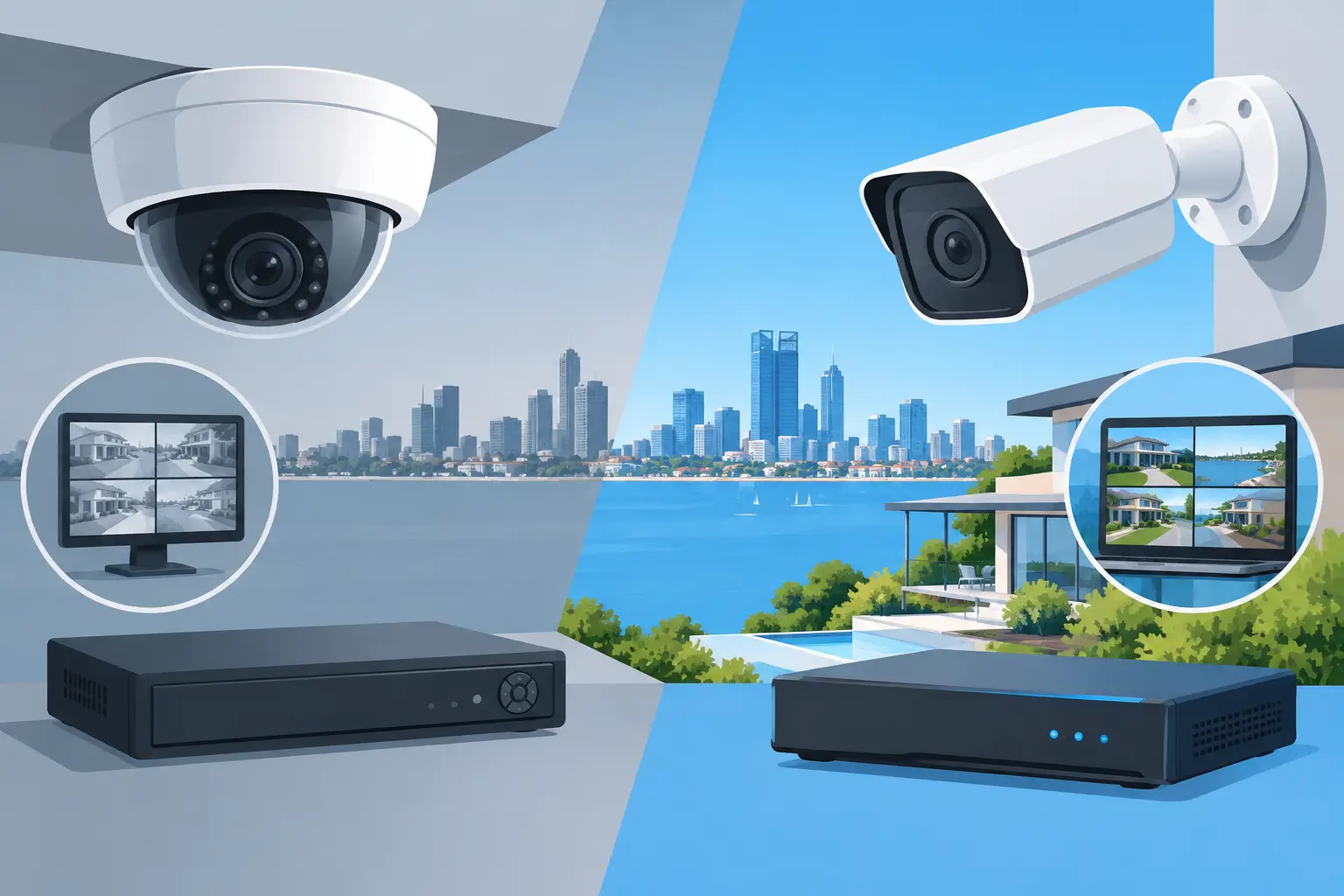
An analogue camera sends video over coaxial cable to a digital video recorder, commonly called a DVR. Older analogue systems may produce comparatively low-resolution images, but current HD analogue technologies can deliver strong image quality over existing coax cabling. This makes them a practical upgrade path for many homes, small businesses and established commercial sites.
An IP camera is a network device. It sends digital video across a data network to a network video recorder, or NVR, and is often powered through the same network cable using Power over Ethernet, known as PoE. IP cameras can be installed on a dedicated security network or integrated carefully with an existing business network.
Both camera types can provide remote viewing on a mobile, event recording, night vision and motion alerts. The difference lies in how the video is captured, transmitted, stored and managed.
Analogue versus IP cameras: image detail and coverage
Image quality is usually the first consideration, and for good reason. More detail can make it easier to identify faces, read number plates and investigate an incident with confidence.
IP cameras generally provide the greatest choice in resolution. Higher-resolution models can cover wider areas while retaining useful detail, reducing the number of cameras needed in some layouts. For a large warehouse, expansive yard, school grounds or multi-site operation, this can be a major advantage. Specialist IP options such as multi-sensor cameras, fisheye cameras and advanced analytics also suit sites with complex monitoring requirements.
That does not mean analogue is poor quality. Modern HD analogue cameras can provide clear footage for common applications such as front entries, driveways, retail counters, corridors, staff doors and smaller car parks. If a site already has quality coaxial cabling installed, upgrading cameras and the recorder may significantly improve visibility without the cost and disruption of running new network cable.
Resolution alone should never determine camera placement. A high-resolution camera mounted too high, aimed across bright sunlight or positioned too far from the area of interest may still fail to capture usable evidence. Professional design considers lighting, fields of view, likely approach paths, night-time conditions and the exact detail required at each location.
Low-light performance matters more than megapixels
Perth properties often deal with intense afternoon sun, deep shadows under verandahs and low light around external areas after business hours. Camera performance in these changing conditions matters.
Look for properly matched infrared illumination, wide dynamic range and suitable lens selection. In some locations, external lighting or a purpose-built low-light camera will deliver a better result than simply choosing a higher megapixel rating. A professional site assessment can identify these issues before installation, rather than after an incident reveals a blind spot.
Cabling, installation and upgrade costs
The cabling already in a property often has a strong influence on the most sensible option.
Analogue systems typically use coaxial cable for video, with separate power cabling or a combined cable. Where that cable is sound and routes are accessible, an HD analogue upgrade can be efficient and affordable. It can preserve much of the existing installation while replacing outdated cameras and the DVR.
IP cameras usually require Cat5e or Cat6 network cabling, network switches and an NVR. PoE can simplify camera power because one cable carries both power and data. On a new build, renovation or site where cable routes are readily available, this creates a tidy and scalable foundation. On an older building with difficult roof access, concrete construction or long cable pathways, the labour involved can alter the overall budget substantially.
Wireless cameras may appear to avoid cabling costs, but they still need reliable power unless they are battery-operated. They also rely on stable wireless coverage and can be less suitable for critical commercial coverage. For permanent security cameras, wired connections are generally the more dependable choice.
Cost should be assessed across the life of the system, not only on installation day. A lower initial investment may suit a straightforward residence or small tenancy. A higher-specification IP design may be better value for a growing organisation that needs additional cameras, centralised management or integration with access control in the future.
Remote viewing, storage and everyday use
Most current DVR and NVR systems allow authorised users to view cameras remotely, receive alerts and review recorded incidents from a mobile or computer. For homeowners, that may mean checking a delivery at the front door. For business owners, it may mean verifying an after-hours alarm activation without travelling to site.
IP systems can offer more sophisticated search functions and event-based recording. Depending on the equipment selected, analytics may flag line crossing, people, vehicles or objects left in an area. These functions can reduce the time spent scrolling through hours of footage, especially on busy commercial sites.
However, advanced alerts need careful configuration. A camera pointed at a moving tree, busy road or reflective surface can generate unnecessary notifications. Good commissioning is essential. The goal is useful information, not a mobile that alarms all night.
Storage requirements also vary. Higher-resolution video, more cameras, continuous recording and longer retention periods all require greater recorder capacity. An installer should calculate storage based on your camera settings and recording requirements, rather than selecting a recorder based on a generic package.
Reliability and cyber security considerations
Analogue systems are comparatively self-contained. The cameras connect directly to the DVR, which can make the system simpler to manage on smaller sites. If remote access is required, the recorder still needs secure configuration, but the cameras themselves are not usually individual network devices.
IP camera systems offer greater flexibility, but they require sound network planning. Default passwords must be changed, firmware should be kept current, user access should be limited and the system should be configured securely. On commercial sites, separating security devices from the main business network may be appropriate.
Neither technology is maintenance-free. Camera lenses become dusty, spider webs can obscure infrared illumination, hard drives eventually wear out, and storm events or power issues can affect equipment. Regular servicing confirms that cameras are recording, time and date settings are correct, footage can be retrieved and critical views have not changed.
Which system suits your property?
An analogue system is often a strong fit when existing coaxial cabling is usable, camera numbers are modest and the main need is dependable coverage at an appropriate budget. It can be particularly effective for established homes, small retail premises and sites replacing an older CCTV system.
An IP system is often better suited to new builds, larger premises, sites needing high-detail coverage, organisations with multiple locations, or businesses wanting advanced search and integration options. It is also a sound choice where future expansion is likely and network cabling can be installed properly from the start.
For many properties, the best answer is not a blanket recommendation. A home may need clear identification at the entry and driveway, but only general awareness at side gates. A business may need number plate capture at a vehicle entrance, wide coverage across a warehouse and restricted access to live footage for different managers. Each area should be designed around a purpose.
Privacy should also be considered. Cameras should be aimed at your property and legitimate areas of operation, with particular care around neighbouring homes, public spaces and staff amenities. Businesses should communicate camera use appropriately and ensure their arrangements meet their applicable workplace and privacy obligations.
A tailored site inspection will identify whether existing cables can be retained, where camera views should sit, how long footage should be kept and what level of remote access is genuinely useful. With more than 30 years of experience, Securitec Security designs and maintains systems that remain practical long after installation. The most valuable camera system is the one that captures the right detail, works when needed and stays easy for the people responsible for protecting the property.