How to Choose Home Alarm Protection That Fits
A home alarm should fit the way your household actually lives. A system that is complicated to arm, triggers false alarms, or leaves key entry points uncovered can quickly become something you stop using. Knowing how to choose home alarm protection starts with your property, routines and the level of response you want when something is not right.
For Perth homeowners, that may mean protecting a family home while everyone is asleep, keeping an eye on a vacant property while travelling, or securing a shed, garage or workshop containing valuable tools and equipment. The right answer is rarely a one-size-fits-all kit. It is a considered system designed around the risks that matter at your address.
Start with the property, not the product
Before comparing alarm panels or apps, look at how someone could enter your home and what they could access once inside. Ground-floor doors, sliding doors, accessible windows, side gates, garages and connected sheds all deserve attention. So do areas that are out of sight from the street or neighbours, particularly around the side and rear of the property.
A practical assessment also considers daily movement. Which doors are used most often? Does someone leave early for work? Are children or pet sitters likely to come and go? Is there a dog moving through living areas overnight? These details determine where devices should be placed and how the system should operate.
An alarm is most effective when it creates layers. Perimeter protection can alert you as a door or window is opened, while internal detection provides coverage if an intruder gets further into the home. External lighting, CCTV and a visible alarm presence can add deterrence, but each has a different job. Cameras help verify events and provide footage. An intrusion alarm is designed to detect unauthorised entry and raise an immediate alert.
Choose home alarm coverage for real risks
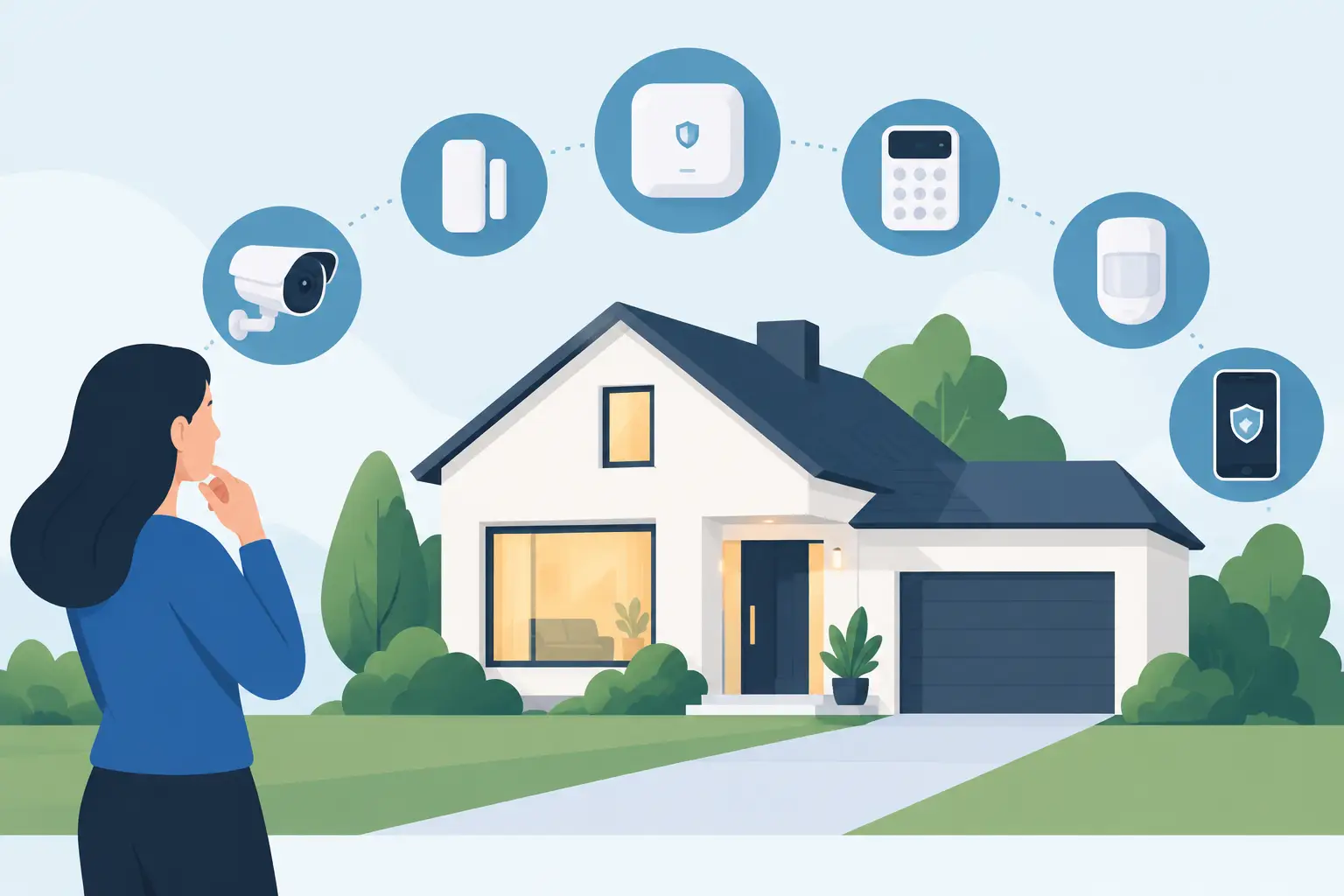
Most residential systems combine a control panel, keypad or app, motion detectors, door or window contacts, a siren and a communication method. The value is not in having every available device. It is in selecting the right devices for each part of the home.
Protect likely entry points
Door contacts are well suited to front doors, rear doors, internal garage doors and sliding doors. They can be particularly useful for night-time arming, when the family is home but external entry points need protection. Window contacts may be appropriate for accessible windows, especially those hidden from the road or located near a side path.
Motion detectors add broad coverage through hallways, living areas and routes an intruder would likely use. They should be positioned carefully so they do not create unnecessary triggers from direct sunlight, heating vents or normal household activity. If pets have access indoors, discuss pet-aware detector options and their practical limitations. A large or active pet may still require a different design approach.
For homes with garages, detached workshops or garden sheds, think beyond the main dwelling. Tools, bicycles, sports equipment and stored goods are often targeted because they can be removed quickly. A separate zone can make these spaces easier to manage without affecting the rest of the house.
Decide whether you need monitored response
An alarm that sounds locally may deter an intruder and alert neighbours, but it relies on someone hearing it and taking action. A system with professional monitoring can send alarm events to a control room, where operators follow an agreed response procedure. This may be appropriate for households that travel regularly, homes that are vacant for parts of the day, or properties containing high-value items.
Self-notification through a mobile app can be a useful option for homeowners who want alerts directly. However, it carries a responsibility: someone needs to see the notification, assess it and respond. If you are in a meeting, on a flight or simply asleep, that may not be realistic. The right choice depends on your routine, budget and tolerance for managing an incident yourself.
Reliable communications matter in either case. Ask how the system communicates if the internet connection drops or power is interrupted. Depending solely on home Wi-Fi may not suit every property. A professionally designed system can include backup power and alternative communication pathways to maintain protection during common disruptions.
Wired, wireless or a hybrid system?
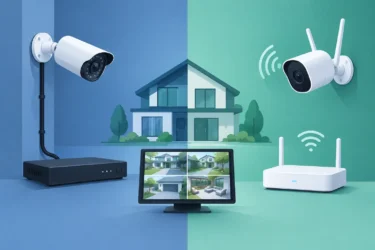
Wireless alarms are popular in established homes because devices can often be installed with less disruption. They are flexible, tidy and well suited to extensions or properties where running cable is difficult. Quality wireless devices also report battery status, helping you plan maintenance before a battery becomes a problem.
Wired systems remain an excellent option, particularly during a new build, major renovation or where cable routes are accessible. They avoid routine detector battery changes and can be highly dependable over the long term. The trade-off is installation access and labour, which can be more involved in an existing home.
A hybrid system can combine both approaches. For example, wired devices may be installed where practical while wireless protection extends coverage to a detached garage or difficult-to-reach area. There is no universal winner. The best choice is the one that provides reliable coverage without compromising the home or creating avoidable installation costs.
Make daily use simple enough for everyone
The most capable alarm system is only useful if your household can operate it confidently. Consider who needs access: parents, teenagers, cleaners, carers or trusted tradespeople. Individual user codes or app permissions are usually safer and easier to manage than a shared code that everyone knows.
Ask how the system handles common situations. Can you arm only selected areas at night? Can the garage be armed while the house remains in use? Can you check the system status from your mobile? Can you receive a message if a child arrives home and disarms the alarm after school?
Ease of use should not mean reduced security. A clear keypad, logical zones and straightforward instructions help reduce user error. It is also worth confirming what happens if a code is entered incorrectly, a detector battery is low, or a door is left open when you attempt to arm the system.
Look beyond installation day
Home security is not a set-and-forget purchase. Batteries age, internet equipment changes, renovations alter room layouts and household routines evolve. A system that was suitable five years ago may need adjustment after a new pet, a backyard studio, a solar installation or a change in how the family uses the home.
Choose an installer that can explain the design in plain language, document the system and remain available for servicing, repairs and upgrades. Professional installation also matters because device placement, cable work, programming and testing directly affect whether the alarm performs as intended.
Before accepting a quote, clarify what is included. This should cover the number and type of devices, internal and external sirens, backup power, communication equipment, programming, user training and any ongoing monitoring or service costs. A cheaper quote may omit the very features that make the system dependable when it is needed.
It is sensible to ask whether the equipment can expand later. A home alarm may eventually need additional sensors, camera integration, access control for a gate, or coverage for an extension. Starting with a quality panel and a sound design can make future changes simpler and more economical.
Questions worth asking before you commit
A professional site assessment should leave you with clear answers, not technical jargon. Ask which entry points are protected, which areas are covered by motion detection, how the alarm communicates, and what backup is available during a power or internet outage. Ask how false alarms are reduced, who can service the system, and what support is available if an issue occurs after installation.
It is equally useful to ask what the proposed system does not cover. For example, an internal detector may not provide perimeter warning while you are home, and CCTV does not automatically prevent entry. Understanding these boundaries helps you make a sensible decision rather than relying on assumptions.
With 30 years of experience protecting Perth properties, Securitec Security approaches residential alarms as a tailored, maintainable security solution rather than a box of devices. The goal is dependable protection that suits the home now and can be supported as needs change.
A well-chosen home alarm should become part of your routine without adding stress to it. Start with the parts of the property and lifestyle that need protection most, then choose reliable technology and professional support that give your household genuine confidence when the door closes.