
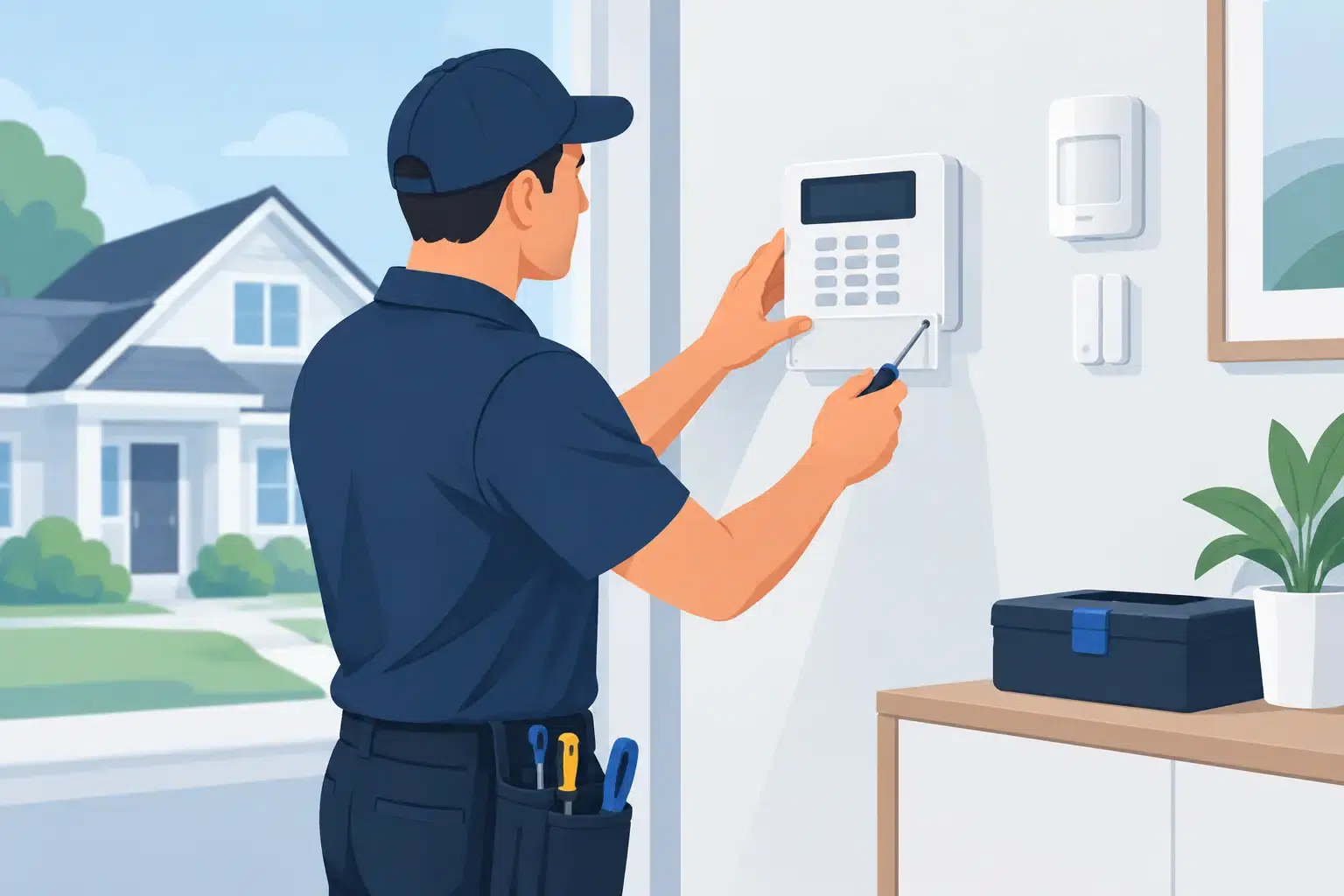
How Often Should a House Alarm Be Serviced?
A house alarm can appear to be working right up until the moment it is needed. The keypad may light up, the app may still connect, and the system may arm each night – yet a weakening backup battery, obstructed detector or communication fault can leave a gap in protection. So, how often should a house alarm be serviced? For most Perth homes, a professional service every 12 months is the sensible baseline, supported by simple owner checks throughout the year.
That annual visit is not just about confirming that the siren makes noise. It is an opportunity to test the system as a complete security solution: detection, warning devices, backup power and communication with monitoring or your mobile. Regular attention helps identify small issues before they create false alarms, nuisance faults or a system that does not respond as expected.
How Often Should a House Alarm Be Serviced?
A professionally installed residential alarm should generally be serviced once a year. This interval suits most wired, wireless and smart alarm systems in normal home environments. It keeps batteries, detectors, communications and programming under review without creating unnecessary disruption for the household.
Some systems need more frequent attention. A property exposed to coastal air, heavy dust, insects, construction work or extreme heat may benefit from a six-monthly inspection. Homes with an alarm connected to professional monitoring, complex automation, multiple outbuildings or a large number of wireless devices can also justify a shorter service cycle.
The manufacturer’s recommendations and any monitoring agreement should always take priority. If your insurer has conditions around alarm maintenance, retain service records as well. An alarm is only one part of protecting your home, but documented maintenance demonstrates that the system has been cared for properly.
What Happens During a Professional Alarm Service?
A proper alarm service is a functional inspection, not a quick look at the keypad. A technician should assess how the individual devices and the control equipment work together, then address faults before they become a concern.
The control panel and keypad are checked for fault history, tamper alerts, programming issues and signs of wear. The technician tests the mains supply and backup battery, which is particularly important during a power outage. Alarm batteries often decline gradually, so a system may seem normal until it needs to operate without mains power.
Each detector is tested for correct activation and coverage. This can include motion sensors, reed switches on doors and windows, glass-break detectors, smoke detection where integrated, panic buttons and external beams. The technician will also look for practical problems such as a sensor blocked by furniture, a loose contact, spider webs near a detector or a device affected by direct sunlight.
The internal siren, external siren or strobe, and any connected communications path should also be checked. If your alarm sends notifications to a mobile, reports to a monitoring centre or uses a landline, NBN-compatible connection, 4G or IP network, those channels need testing too. A communication path that has silently failed can undermine an otherwise healthy alarm.
For wireless systems, battery condition and signal quality matter. Wireless detectors are reliable when correctly specified and maintained, but their batteries are not permanent. Replacing them on a planned basis is far better than waiting for a low-battery alert at an inconvenient time.
Your Monthly Checks Matter Too
Homeowners do not need to become alarm technicians. However, a short monthly check is a practical way to spot changes early and stay familiar with the system.
First, confirm that the panel shows no warnings or trouble messages. If the alarm has an app, check that it is still communicating and that the right household members receive notifications. Next, walk around the home and make sure doors and windows protected by contacts close properly, with no loose sensors or obvious damage.
It is also worth considering whether the way you use the house has changed. A new bookcase may block a motion detector. A pet may now have access to an area that was previously empty. Renovations, a new roller door, solar work or changes to your internet equipment can all affect an alarm system.
Avoid repeatedly sounding an external siren without warning your neighbours or monitoring provider. If you want to conduct a full user test, follow your system instructions and notify the relevant people first. A professional technician can guide you through a suitable testing routine for your particular system.
Signs Your Alarm Needs Servicing Sooner
Do not wait for the annual appointment if the system is showing a fault or behaving differently. Early repair is usually simpler, less disruptive and more cost-effective than allowing an issue to develop.
Arrange an inspection if you notice repeated false alarms, intermittent beeping, a low-battery message that does not clear after replacement, sensors dropping offline or a keypad that is slow to respond. You should also act promptly if the system cannot arm, reports a communication failure, has been struck by a power surge or has been exposed to water, smoke or pest damage.
A change in your home is another good reason for a review. If you have added an extension, converted a garage, installed new doors or windows, or begun working from home with valuable equipment on site, the original alarm design may no longer cover the risks it was intended to manage. Servicing can identify these blind spots, while an upgrade can bring coverage back into line with the property.
Batteries Are Not the Whole Service
Replacing a battery is often confused with servicing an alarm. It is an essential task, but it is only one part of the work. A new battery will not correct an incorrectly positioned detector, an outdated communicator, corroded external siren wiring or a sensor with poor wireless signal strength.
Likewise, an alarm that has never triggered is not necessarily proven to be healthy. Many faults only become visible when the system is armed, when mains power fails or when it tries to send an alert. Regular testing under controlled conditions provides confidence that the alarm will perform when the house is unattended.
For Perth properties, heat is a further consideration. Equipment installed in roof spaces, garages and external locations can experience substantial temperature variation. Quality equipment and professional installation make a difference, but periodic inspection remains the best way to catch heat-related deterioration, insects and environmental wear.
When an Upgrade Is Better Than Another Repair
A well-maintained alarm can provide many years of reliable service. Still, there comes a point where replacement components or repeated repairs are less sensible than modernising the system.
Older alarms may rely on communications technology that is being phased out, have limited access to replacement parts or lack the ability to provide useful mobile alerts. They may also be difficult to expand when you add cameras, access control, an intercom or protection for a shed and garage.
An upgrade does not always mean replacing every device. In some homes, existing cabling and selected detectors can be retained while the panel and communications equipment are updated. The right approach depends on the age, condition and design of the current system, as well as how your family uses the property.
Choose a Service Provider Who Understands the Whole System
The value of servicing comes from more than a checklist. A technician should understand alarm design, fault finding, communications, power supplies and the practical realities of how people live in their homes. They should explain what has been found in plain language and recommend repairs or upgrades based on genuine need.
For homeowners who want long-term support, Securitec Security provides tailored alarm servicing and maintenance backed by Perth-based experience. A professional assessment can confirm whether your system simply needs routine care or whether a specific fault, changed layout or ageing component deserves attention.
Book the annual service before a problem prompts it, and use it as a chance to make sure your alarm still suits the home and the people it protects.