
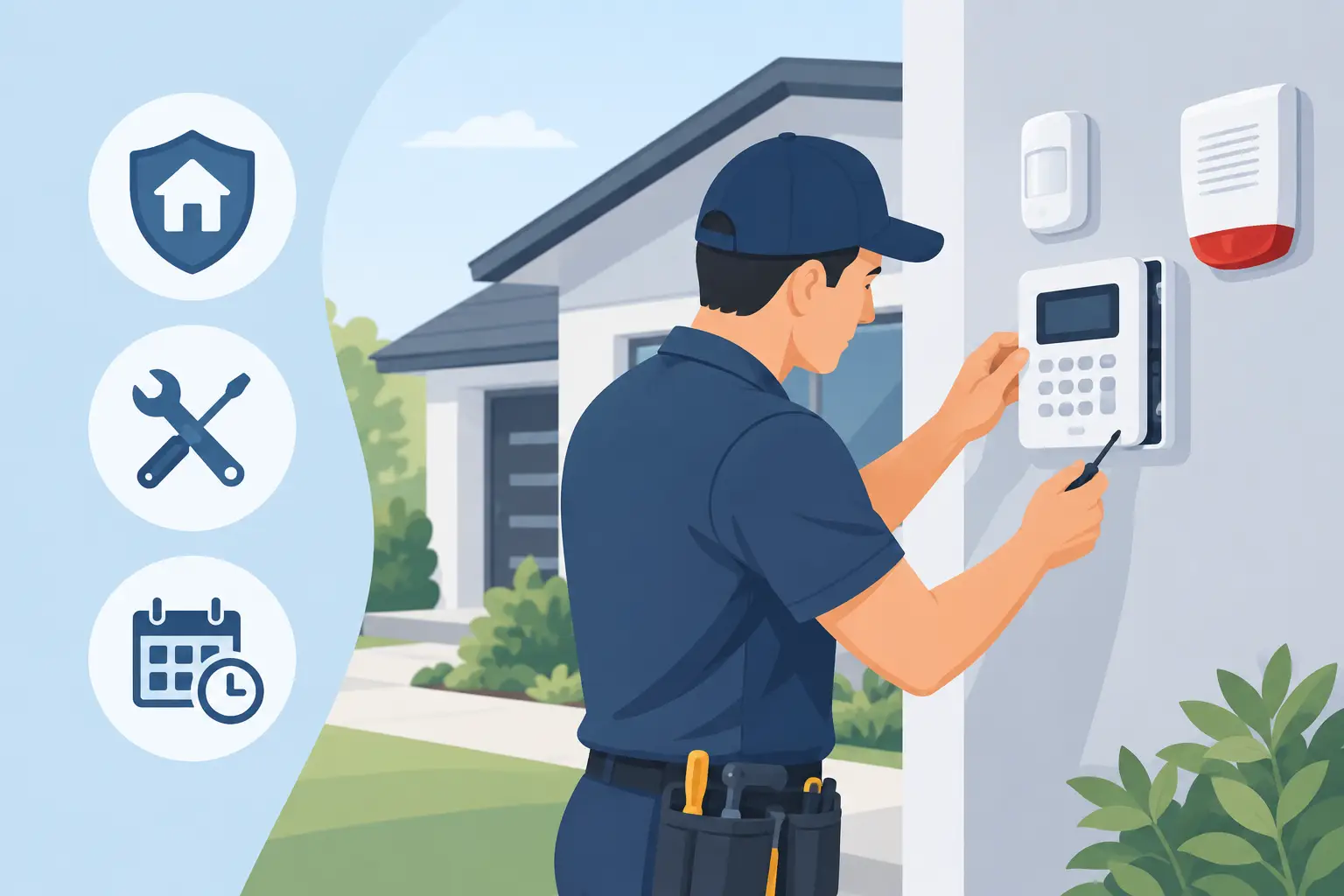
When to Book Security Alarm Repairs Perth
A security alarm rarely fails at a convenient time. It might begin chirping while you are trying to settle the children, show a fault message before opening your shop, or stop communicating just when a site is closed for the weekend. Prompt security alarm repairs Perth residents and businesses can rely on are about more than stopping a noise or clearing a code. They restore a system that is meant to protect people, property and daily operations.
A fault does not always mean the entire system has failed. It can be something as simple as an ageing backup battery, a loose sensor or a disrupted phone or network connection. However, small faults can also mask a bigger issue. Knowing what to look for, and when to call a licensed technician, helps avoid gaps in protection.
Signs You Need Security Alarm Repairs Perth
An alarm system should be quiet and unobtrusive until it is needed. Changes in its usual behaviour deserve attention, particularly if the system protects an unoccupied home, valuable stock, tools, sensitive records or a large industrial site.
Persistent beeping or a trouble message
A keypad that beeps repeatedly or displays a trouble indicator is telling you that part of the system requires attention. A low backup battery is a common cause, especially after several years of service. The system may still arm and disarm, but it may not continue operating through a power outage as intended.
Other messages can relate to a tamper condition, a communications failure, an open zone or a problem with a detector. Recording the exact wording or code on the keypad before arranging service gives the technician a useful starting point. Do not simply silence the alert and assume the issue has gone away.
False alarms or sensors that do not respond
A detector that triggers without an obvious cause can be frustrating for households and disruptive for businesses. False alarms may be caused by movement from pets, insects inside a detector, poor sensor positioning, loose wiring, changing temperatures or a detector reaching the end of its working life.
The opposite problem is more serious: a door contact, motion detector or panic device that does not trigger at all. Test results that seem inconsistent should be investigated professionally. Repeatedly setting off an alarm to diagnose the fault yourself can create confusion and, where monitoring is in place, may lead to unnecessary call-outs.
The alarm cannot arm, disarm or communicate
If your keypad does not accept your code, the app no longer shows the system status, or monitoring reports a missed communication signal, arrange a check promptly. Communication paths can be affected by changes to internet equipment, mobile network arrangements, power supply issues or damaged cabling.
For a commercial property, this can be a particular concern. An alarm that appears normal at the keypad may still be unable to send an event to a monitoring service or nominated contact. Reliable reporting should be verified after any major network, phone or electrical change.
What Causes Alarm Faults?
Security systems are made up of several components, and a problem in one area can affect the whole system. Accurate fault-finding matters because replacing the most visible component is not always the right repair.
Backup batteries and power supply issues
Most alarm panels have a backup battery that supports the system during a mains power outage. Like all batteries, it has a service life. Heat, age and frequent outages can reduce its capacity. A low battery warning is often straightforward to resolve, but an incorrectly specified or poorly fitted replacement can create further faults.
Power supply problems may also involve the panel transformer, a damaged power point, a tripped circuit or wiring. A qualified technician can test the supply safely and confirm that the system will continue operating as designed if mains power is interrupted.
Detector, keypad and wiring faults
Sensors are exposed to normal wear and changing conditions. A home renovation can shift a door contact or introduce a new airflow pattern near a motion detector. In a warehouse, dust, vibration, roller-door movement and temperature variation can affect devices over time.
Wiring faults can be less obvious. Rodent damage, moisture, accidental drilling, corroded connections and ageing cable can all cause intermittent alarms or a zone that drops in and out. These issues call for methodical testing rather than guesswork.
Changes to the property or technology
Security systems should be reviewed whenever the property changes. A new extension, a reconfigured office, additional stock storage or altered access points may leave old detector positions less effective. Likewise, replacing a modem, changing a phone service or installing smart-home equipment can affect how an alarm communicates.
In some cases, repairing an older component is sensible and cost-effective. In others, an upgrade provides better reliability, easier user management or more suitable communications. The right option depends on the age of the system, availability of parts, the condition of existing cabling and the level of protection required.
What to Do When Your Alarm Has a Fault
Start by checking for obvious, safe causes. Confirm that the property has power, make sure all protected doors and windows are fully closed, and check whether a recent internet or power interruption occurred. If the keypad shows a code, take a photo of it. These simple details can speed up diagnosis.
Avoid opening the alarm panel, bypassing zones without understanding the consequence or disconnecting batteries to stop a beeping sound. This can trigger a tamper alarm, remove backup protection or make the original fault harder to identify. If there is an immediate threat to people or property, follow your emergency procedures and contact emergency services where required.
For monitored systems, notify the monitoring provider or your security contact if you believe the alarm may not be communicating. Businesses should also let relevant staff know if a system has been placed in test mode or has a temporary limitation. Clear communication prevents assumptions at the end of the day when a site is being armed.
Prepare useful information for the technician
You do not need technical knowledge to arrange an effective service visit. It helps to provide the make or age of the system if known, the fault message, when it first occurred and whether anything has changed at the property. Mentioning recent electrical work, NBN or modem changes, renovations, storm damage or repeated false alarms can narrow down likely causes.
For commercial and industrial sites, explain which areas are affected and whether the fault impacts access control, CCTV integration, remote monitoring or multiple locations. A technician can then arrive prepared to assess the broader security environment, not just one keypad message.
Repair Is Also an Opportunity to Check Protection
A repair visit is a practical time to assess whether the alarm still suits the way you use the property. Families may need simple controls for different household members and dependable coverage for new living areas. Small businesses may need to manage staff codes more closely, protect a rear delivery entrance or improve after-hours notification.
Larger sites often need more consideration. Security may involve alarms, access control, CCTV, intercoms and remote management across several locations. These systems do not need to be replaced simply because one device has failed, but they should work together in a way that supports daily operations and clear incident response.
Regular servicing reduces the chance of discovering a preventable problem when you need the system most. It can include testing detectors and sirens, checking backup power, confirming communication paths, inspecting cables and reviewing user operation. The appropriate service schedule depends on the equipment, site conditions and the consequences of downtime.
With 30 years of local experience, Securitec Security approaches repairs as part of a long-term security plan, whether the system protects a family home, a local workshop or a multi-site operation. Licensed, police-cleared technicians can identify the cause of a fault, explain the practical options and complete work to a professional standard.
A fault message is not something to put off until the next break-in, blackout or busy trading period. Arrange a professional assessment while the issue is still a warning, and your alarm can return to doing its quiet, essential job.