What Causes False Alarm Activations at Home?
A 2 am alarm activation can be unsettling for a family, disruptive for neighbours and costly for a business. Understanding what causes false alarm activations is the first step towards reducing unnecessary call-outs without compromising the protection your system provides. In most cases, false alarms are not caused by one major fault. They result from a detector reacting to movement, heat, environmental change or an issue with the way the system is used.
A correctly designed, professionally installed and regularly maintained alarm system should be dependable. However, every property has different conditions – from Perth heat and dusty worksites to pets, open windows and changing staff routines. The solution is rarely to simply turn down sensitivity. It is to identify the source and correct it properly.
What causes false alarm activations?
False alarm activations usually fall into three areas: environmental conditions, user operation and equipment performance. A security technician will assess all three, because a detector may be operating exactly as designed while responding to an unsuitable location or an unexpected change in its surroundings.
Movement inside a protected area
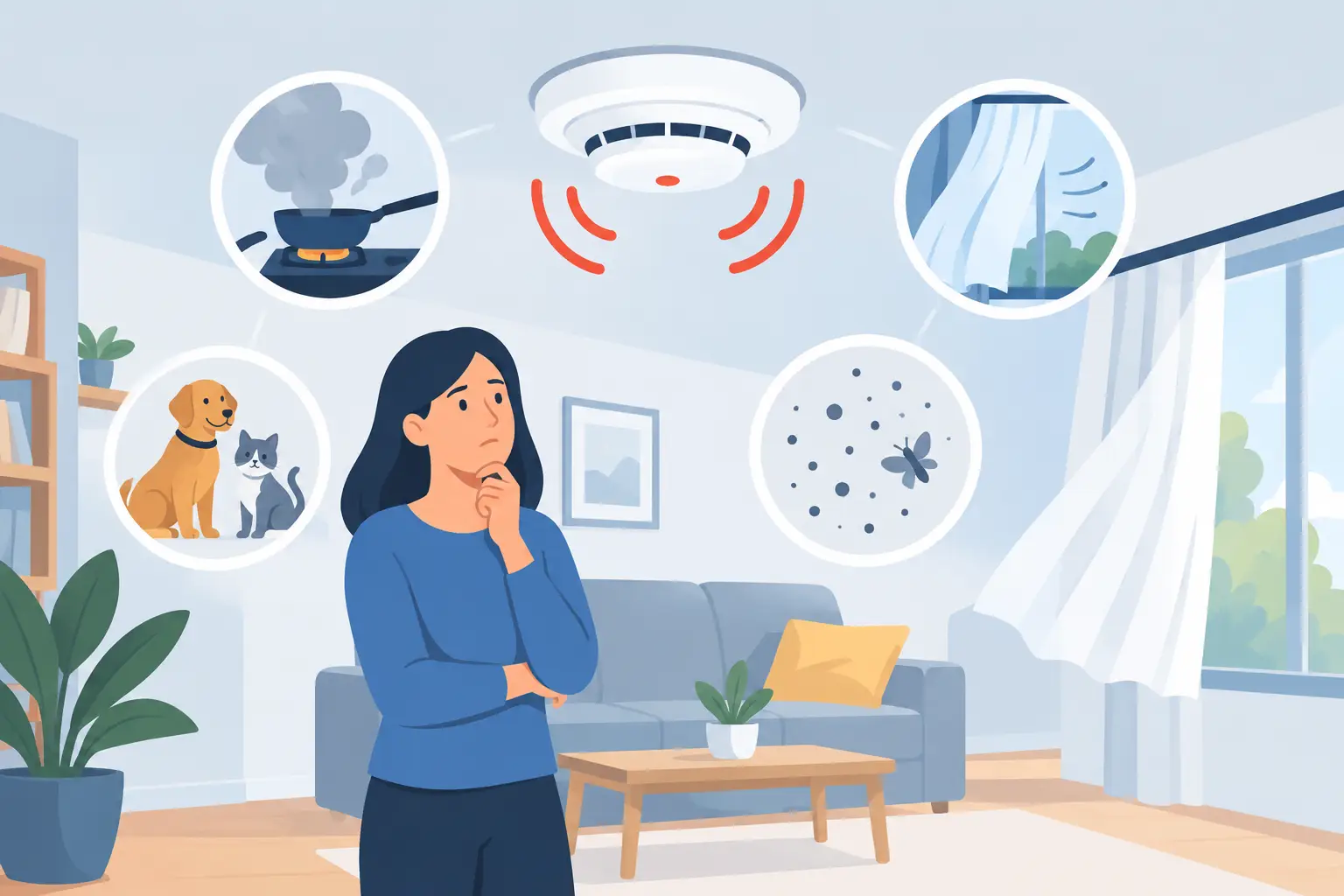
Passive infrared, or PIR, detectors identify changes in heat and movement. They are highly effective for detecting an intruder, but can activate when a pet enters an armed area, a curtain moves near a warm window, or an insect crawls across the detector lens.
Pets are a frequent cause in homes. Even a pet-friendly detector has limits. A large dog jumping onto furniture, two animals moving together, or a cat climbing close to a sensor can exceed its intended tolerance. Pet immunity also depends on correct mounting height, sensor selection and the animal remaining on the floor rather than accessing benches, shelves or stair landings.
In commercial and industrial premises, stock moving in airflow, birds entering a warehouse, or a roller door left partially open can produce the same result. The alarm system needs to reflect how the site actually operates after hours, not just how it appeared on installation day.
Heat, sunlight and airflow
Perth properties regularly experience high temperatures and strong sunlight. Direct afternoon sun on a detector, heat from a fireplace, or a portable heater positioned nearby can create rapid temperature changes that affect a PIR sensor. Air-conditioning outlets and ceiling fans can also move warm and cool air through a detection zone.
This does not mean the alarm is unsuitable for Western Australian conditions. It means detector placement matters. A quality system should be designed so sensors are not facing windows with intense sun exposure, heating appliances, air-conditioning vents or areas where temperature fluctuates quickly.
External sensors face additional challenges. Reflected sunlight, hot paving, moving vegetation and wildlife all need to be considered when selecting and positioning outdoor detection equipment.
Doors, windows and loose fittings
Reed switches and contacts fitted to doors, windows, gates and roller doors can trigger when the contact and magnet move too far apart. A loose fitting, shifting door frame or worn hinge may create an intermittent alarm condition that is difficult to notice during the day.
Buildings naturally move with temperature changes, and older premises can have doors or windows that expand, contract or sit differently at different times of year. On commercial sites, vibration from machinery, heavy vehicles or roller-door operation may also affect poorly secured contacts or cabling.
A technician can test these devices, inspect their alignment and determine whether adjustment, replacement or a more suitable contact type is required.
Dust, insects and contamination
Dust, cobwebs and insects can interfere with alarm detectors, particularly in roof spaces, garages, warehouses and industrial environments. Spiders may build webs around a sensor, while small insects can enter or pass across detector housings. In Perth, this is a practical maintenance issue rather than an unusual event.
Smoke detectors and other life-safety devices can also be affected by dust, steam, cooking residue or aerosol products, depending on their type and location. These devices should never be disabled to stop nuisance alarms. The correct response is to have the cause assessed and the device cleaned, relocated or replaced where appropriate.
Low batteries, ageing components and wiring faults
A low backup battery may not always trigger an immediate alarm, but it can affect system reliability and generate trouble signals. Batteries, detectors, keypads and communications devices all have service lives. As components age, their performance can become inconsistent.
Damaged cabling, loose terminals and moisture exposure can also cause intermittent activation. These faults may appear only during rain, extreme heat or power interruptions, which makes professional testing valuable. Replacing a battery may resolve one issue, but it will not correct a detector nearing end of life or a cable fault concealed inside a wall or ceiling.
Wireless systems require particular attention to battery condition, signal strength and device supervision. A professional service checks these details before a minor issue becomes a recurring interruption.
User error is common, but it is fixable
False alarms are often linked to everyday routines. A family member may enter through a protected door before disarming the system, a cleaner may not know the code, or an employee may arm the premises while another person remains in a rear office.
For businesses, staff turnover can make this more likely. Shared PINs, unclear closing procedures and informal handovers create avoidable risk. Individual user codes, clear arming instructions and a simple end-of-day process are more accountable and easier to manage.
It is also worth checking alarm timing. An entry delay that is too short can catch a homeowner before they reach the keypad. Conversely, a delay that is too long can reduce the system’s ability to respond promptly. The right setting depends on the layout of the property, the usual entry point and how occupants use the system.
If your system includes an app, key fob or access-control integration, every authorised user should understand which areas are armed and when. A tailored handover after installation makes a meaningful difference, especially for larger premises with multiple zones.
Why reducing false alarms matters
An alarm that activates unnecessarily can lead people to assume future alerts are not genuine. That is the most significant risk. Occupants may be slower to react, neighbours may ignore the sound, and business managers may lose confidence in a system that should provide reassurance.
Repeated false alarms can also create unnecessary monitoring responses or attendance costs, depending on your arrangements. More importantly, they interrupt operations. A site manager called out overnight, or a parent dealing with an alarm during school drop-off, needs a clear answer and a reliable fix.
The aim is not to make an alarm less responsive. It is to make it more precise. Good system design balances detection coverage with the normal movement, conditions and routines within the property.
Practical ways to prevent false activations
Start by noting the time, zone and circumstances of each activation. Was the air-conditioning running? Had a pet been left in a particular room? Was it a hot day, a windy night or a period of heavy rain? This information helps a technician identify patterns far more quickly than a general report that the alarm “went off”.
Keep doors and windows secure before arming, and make sure all household members or staff know the correct disarming process. Avoid placing heaters, fans, tall furniture or decorations directly in front of detectors. If you change the use of a room, install new shelving, bring a pet home or alter warehouse layouts, consider whether the alarm coverage should be reviewed.
Regular servicing is equally valuable. During a maintenance visit, a technician can inspect detector condition, test batteries and backup power, check contacts and tamper protection, clean equipment where appropriate, confirm communication paths and review whether the system still suits the premises. For commercial sites, this is also a sensible opportunity to review user access and closing procedures.
Securitec Security works with Perth homes, businesses and industrial sites to diagnose recurring alarm issues and maintain systems for dependable day-to-day operation. A tailored assessment is particularly useful when the cause is intermittent, as testing needs to account for the environment as well as the hardware.
An alarm should give you complete peace of mind, not leave you wondering whether the next alert is real. If activations are recurring, arrange a professional inspection before a small fault, unsuitable detector position or routine change becomes a larger security gap.