Industrial Perimeter Security Guide for Perth Sites
A perimeter breach rarely begins with a dramatic break-in. More often, it starts with an unsecured side gate, a poorly lit loading area, a blind spot behind stored pallets or a contractor whose access was never removed. This industrial perimeter security guide is designed for Perth site managers who need to protect stock, equipment, vehicles and people without making daily operations harder.
Industrial sites present a different security challenge from a standard office or retail premises. They may have large boundaries, multiple entry points, shifting work hours, valuable plant, exposed storage and frequent deliveries. A practical system must deter opportunistic intrusion, detect genuine threats quickly and provide clear evidence when an incident occurs.
Start with the way your site actually operates
Effective perimeter security begins with a site assessment, not a product list. The question is not simply where to put cameras or sensors. It is how people, vehicles and goods move through the property across a normal week, after hours and during unusual events.
Walk the boundary at different times of day. Look at fencing, gates, pedestrian access points, loading docks, hardstands, car parks and areas where equipment is stored. Consider what can be seen from the street and what is hidden by racking, containers, vegetation or parked vehicles. Perth’s strong sunlight can create severe glare in the afternoon, while rain, dust and low light can affect poorly selected equipment.
It also helps to review past incidents, even those that did not lead to a loss. Repeated false alarms, damaged fencing, trespassers, missing tools and gates left open are all useful indicators. They show where procedures or technology need attention.
Build security in layers, not around one device
A fence is valuable, but fencing alone does not tell you when someone has crossed the boundary. Cameras can record an event, but they may not prevent access or alert the right person in time. The strongest industrial designs use several complementary layers so that one weakness does not expose the whole site.
The physical boundary
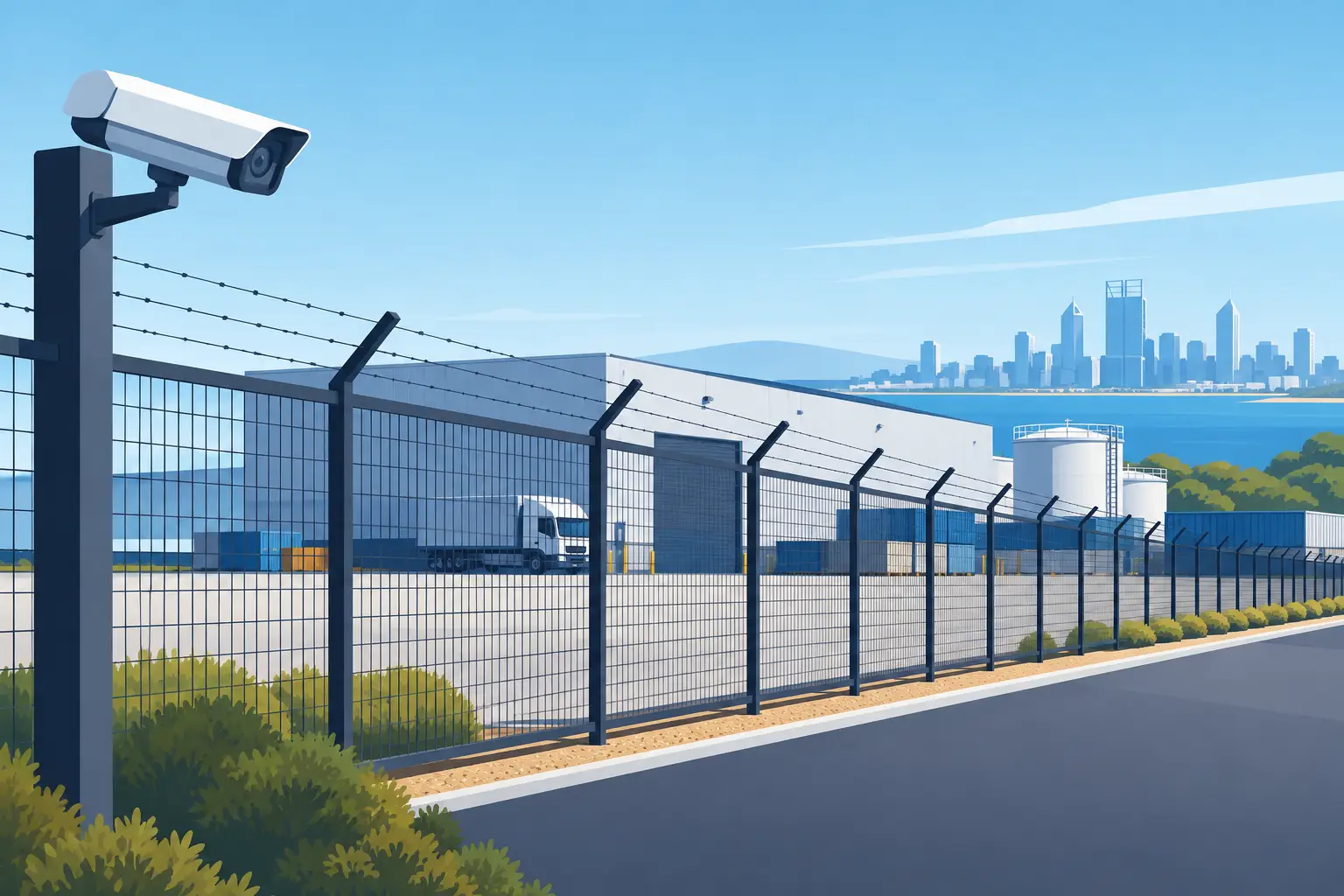
The first layer is the physical perimeter. Fencing, secure gates, bollards and protected vehicle entry points make unauthorised access more difficult and more visible. Check that the fence line is continuous, properly tensioned and not compromised by overgrown landscaping, stacked materials or gaps beneath gates.
Vehicle gates deserve particular attention. A sliding gate that remains open during busy dispatch periods can become the easiest way onto the site. Depending on operations, timed closing, controlled entry, intercom verification or separate staff and delivery access may be appropriate. The right approach depends on traffic volume and whether drivers need to enter outside normal hours.
Detection and deterrence
Intrusion detection adds an active layer to the boundary. External beams, fence-line detection, gate contacts and motion detection can identify an attempted entry before an intruder reaches buildings or high-value assets. However, outdoor detection must be selected and installed carefully. Equipment that is too sensitive can create false alarms from wildlife, wind-blown vegetation or moving machinery, eventually causing staff to ignore alerts.
Visible security cameras, signage and well-planned lighting provide deterrence. Good lighting should support camera performance and safe movement, rather than flooding neighbouring properties or creating glare that obscures faces and number plates. Lighting activated by movement can be useful in low-traffic zones, while consistently lit vehicle and pedestrian routes may suit sites with night shifts.
Verification through CCTV
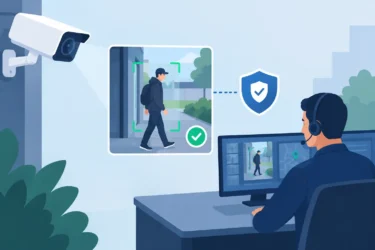
CCTV is most useful when it answers a specific operational question: who entered, what happened, where did they go and which vehicle was involved? Camera placement should cover perimeter approaches, gates, loading zones, fuel stores, workshops, yards and access-controlled doors. General overview cameras are helpful, but they should be complemented by cameras positioned to capture usable identification at key decision points.
Image quality matters more than camera quantity. A system should be designed for the required detail, including faces, vehicle registration plates or activity around a protected asset. Camera height, angle, lighting, lens selection and recording settings all affect whether footage is genuinely useful after an incident.
For larger or multi-site operations, remote viewing can help authorised managers check alarms, deliveries and after-hours activity from a mobile device. Access permissions should be managed carefully. Not every employee needs access to every camera feed or recorded image.
Control every way people enter
An industrial perimeter is not limited to the fence. Every gate, roller door, personnel door and vehicle entrance is part of the security boundary. Access control replaces shared keys with accountable access credentials such as cards, fobs, PINs or mobile access, allowing businesses to control who can enter particular areas and when.
This is particularly useful where staff work different shifts, contractors attend regularly or a site has sensitive areas such as server rooms, chemical storage, workshops or inventory cages. If a staff member leaves or a contractor completes their work, access can be removed without recovering every key or changing locks across the facility.
Intercoms also provide a practical checkpoint at pedestrian and vehicle gates. A receptionist, supervisor or authorised staff member can verify visitors before granting entry. On sites with no permanently staffed reception, video intercoms can support remote verification, provided the approval process is clear and reliable.
Technology cannot compensate for unclear procedures. Staff need to know who can admit visitors, where contractors sign in, how delivery drivers are directed and what to do if a gate or door fails to secure. Simple, documented processes reduce the temptation to prop open doors or lend access credentials.
Connect alarms, cameras and access control
Separate security systems can work well, but integration often improves response and reduces investigation time. When an alarm event occurs at a gate or external zone, linked cameras can display the relevant area for verification. When access is granted at a door, the associated camera can record the event. This provides a clearer timeline without staff searching through hours of footage.
Integration should serve the site, not complicate it. A smaller industrial workshop may need a reliable alarm, a handful of well-positioned cameras and controlled gate access. A distribution facility with multiple buildings, high-value inventory and 24-hour movements may benefit from centrally managed access, alarm partitioning, monitored response and security management across several locations.
Ask whether the system will still be straightforward for staff to use at 5.30 am, during an urgent delivery or when the usual manager is away. Clear labelling, sensible user permissions and training are just as important as the equipment itself.
Plan for power, communications and failure
Perimeter devices are exposed to weather, accidental damage and power interruptions. A professional design considers cable protection, weather-rated housings, network capacity, surge protection and backup power from the outset. Wireless devices can be useful where trenching is impractical, although they require careful assessment of range, interference, battery maintenance and site conditions.
Communications resilience is also worth considering. If an alarm signal or remote camera access relies on one internet connection, determine what happens during an outage. The answer may be local recording, backup communications or a response procedure that does not depend solely on remote visibility.
Cyber security is part of physical security. Change default passwords, use individual user accounts, restrict remote access and keep supported equipment updated. An internet-connected camera system should not be treated as a set-and-forget appliance.
Maintain the system after installation
A perimeter security system is only dependable when it is maintained. Cameras collect dust and spider webs, foliage grows into detection zones, gate motors wear, batteries age and site layouts change. Routine servicing checks that cameras remain correctly aimed, footage is recording for the required retention period, alarms communicate correctly and access permissions still reflect current staff and contractors.
Maintenance is also the right time to review whether the original design still matches the operation. New storage containers, an expanded car park or altered delivery routes can create blind spots and change risk levels. Prompt repair matters too. A faulty camera, damaged gate or recurring alarm issue signals to offenders that a site may be easier to target.
For Perth industrial businesses, working with a licensed, police-cleared local team also means there is someone accountable when equipment needs adjustment, repair or planned servicing. Securitec Security designs and maintains tailored electronic security systems with this full-lifecycle approach in mind.
Make the next decision practical
Begin by identifying the two or three perimeter areas that would cause the greatest operational or financial impact if they were breached. Then assess how those areas are currently deterred, detected and verified. That focused approach creates a clear path to a security design that protects the site while allowing your team to get on with their work.