Security Intercoms That Suit Perth Properties
A gate left on latch during deliveries, an unfamiliar person at reception, or a tradie arriving while nobody is home can quickly expose a gap in site security. Security intercoms give households and businesses a simple way to identify visitors, communicate before granting entry and keep access decisions with the people responsible for the property.
The right system is not necessarily the most feature-heavy one. It is the one that works reliably at the entry point, suits how the property is used and is easy for residents, staff or managers to operate every day. For Perth properties, that also means selecting equipment and installation methods that can handle heat, sun, dust and coastal conditions where relevant.
What security intercoms do beyond answering the gate
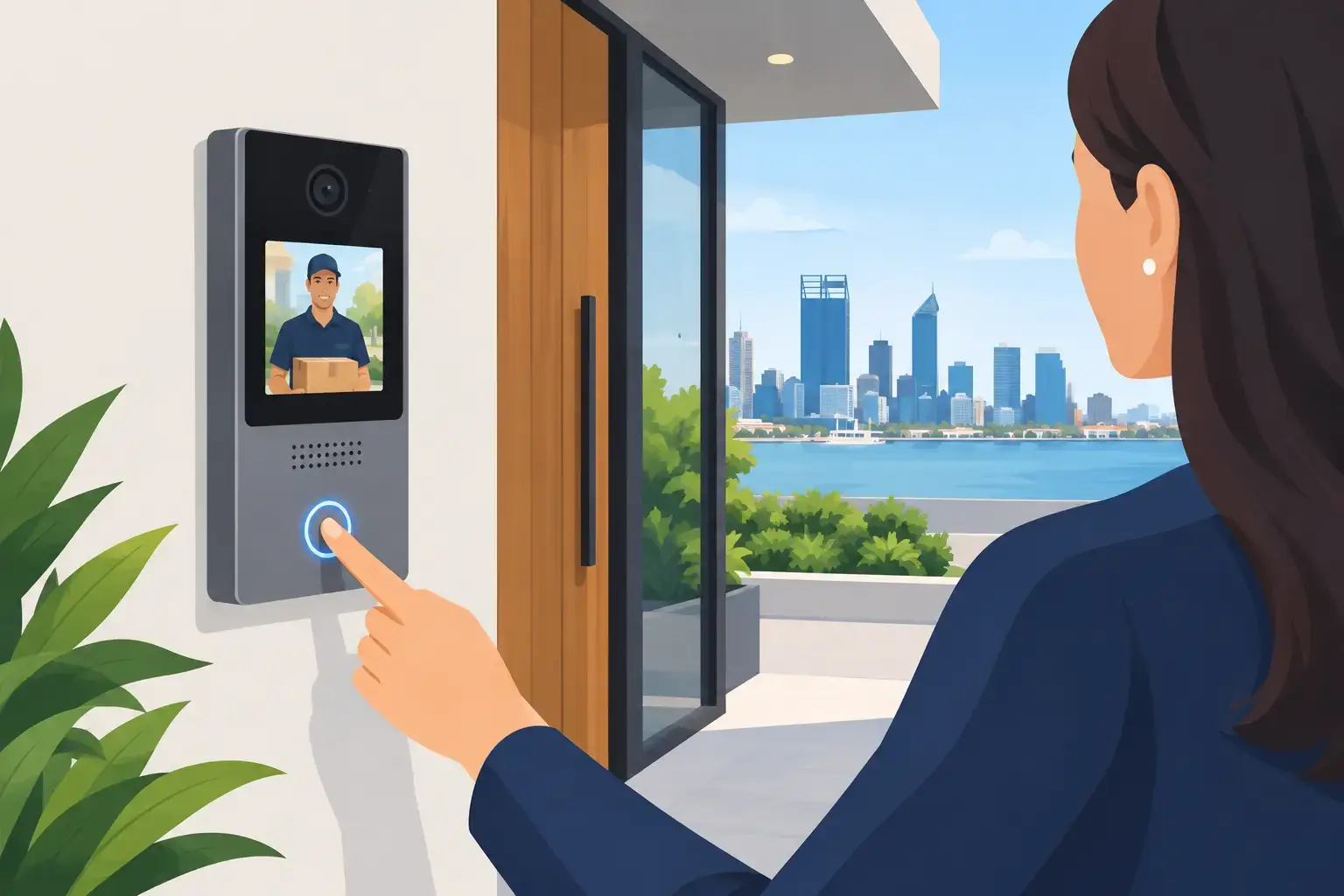
An intercom is often treated as a convenience item, but it can be a meaningful part of a wider security plan. At its most basic, a visitor presses a call button at a door, gate or vehicle entrance. Someone inside answers through an indoor station, handset or mobile app, then decides whether to release an electric strike, magnetic lock or automated gate.
That process creates a controlled point of entry. Rather than relying on an unlocked side gate, a shared key or a person physically walking to the front door, occupants can confirm who has arrived before allowing access. For a family home, that may mean speaking with a delivery driver while the children stay inside. For a workshop or commercial office, it can prevent visitors from walking directly into staff-only areas.
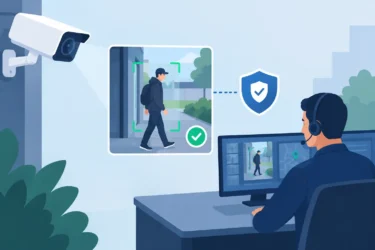
Video intercoms add another useful layer. Live video allows the user to visually verify a visitor, vehicle or contractor, especially where a name alone is not enough. Some systems can capture an image or video event when a call is placed, although recording features vary by model and configuration. This is where a properly designed system matters: camera angle, lighting and the position of the call panel determine whether the image is genuinely useful.
Choosing security intercoms for the way your site operates
The first decision is usually between audio-only and video. Audio intercoms are cost-effective and dependable for sites where visual identification is not essential, such as a small office with a clearly visible reception entrance. Video is generally better suited to homes, remote gates, medical practices, warehouses and commercial premises where the caller may be outside the line of sight.
Wired systems are often the strongest long-term option for new builds, major renovations and commercial sites. Cabling provides stable communication, avoids the ongoing concern of wireless range and can support more complex arrangements across several entry points. The trade-off is that installation may require trenching, conduit, ceiling access or coordination with builders and other trades.
Wireless or app-enabled systems can be practical where running new cable is difficult or disruptive. A resident or manager may receive a call on their mobile, speak to the visitor and release the entry remotely where the system has been designed for that function. This is particularly useful for owners who are often off-site. However, mobile access should not be treated as a substitute for sound network design. Wi-Fi coverage, internet reliability, power backup and user permissions all need consideration.
For larger sites, the discussion moves beyond one front door. A commercial facility may need call panels at a pedestrian gate, delivery entrance and reception door, with different staff able to answer different calls. A multi-site organisation may require centralised administration, consistent credential rules and integration with existing access control. These requirements are achievable, but they should be mapped before equipment is selected rather than added as an afterthought.
The entry point matters as much as the device
A high-quality panel placed too far from the gate, facing direct afternoon sun or mounted at the wrong height will frustrate users. At vehicle entrances, the call station must be positioned so drivers can safely reach it without blocking the street or reversing awkwardly. At a home, consideration should be given to pedestrian access, parcel deliveries and whether the gate can be opened without allowing someone to walk unobserved around the side of the property.
For video, installers need to account for backlighting and night-time visibility. A visitor standing beneath a bright exterior light or facing a low western sun can appear as a silhouette. Supplementary lighting, a different mounting position or a camera with appropriate low-light performance may resolve the issue. These details are not cosmetic – they determine whether the intercom helps when identification actually matters.
Residential intercoms: practical protection without complication
For most homes, an intercom should make daily routines easier, not create another device that only one person knows how to use. A clear indoor monitor or mobile notification, straightforward gate release and easy-to-understand visitor communication are usually more valuable than an overloaded control screen.
Video intercoms are especially useful for homes with front gates, long driveways, secondary dwellings or parents who want to check visitors before opening the door. They can also reduce the need to hand out gate remotes to cleaners, gardeners or regular contractors. Depending on the system, temporary access arrangements can be managed through codes, cards, mobile credentials or a remotely operated gate release.
There are limits. Remote opening should be used with care. If a resident cannot clearly identify a caller, opening the gate from work or while travelling may not be appropriate. Good security habits still apply: verify the person, ensure the gate closes properly and avoid sharing codes widely. An intercom improves control, but it cannot replace sensible access practices.
Commercial and industrial sites need defined access rules
At a business premises, visitor access is usually linked to staff safety, asset protection and operational flow. Reception teams need to know who is arriving. Warehouses need to separate delivery drivers from loading areas. Schools, medical centres and strata-managed sites may need to direct visitors to a controlled entry point while maintaining a welcoming experience.
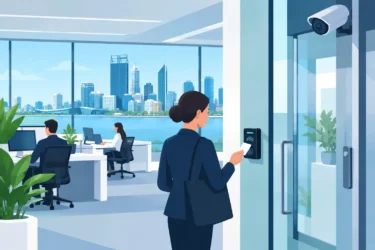
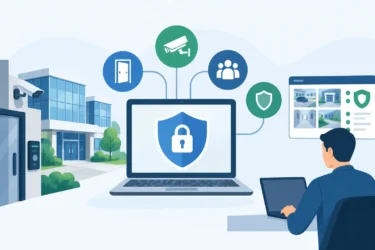
An intercom can work with access control to give authorised staff hands-free or credential-based entry while requiring visitors to call ahead. It can also integrate with CCTV, allowing a clearer view of a gate, foyer or loading dock when a call is received. The benefit is not simply more technology. It is a more accountable entry process, with fewer unsecured doors and less dependence on keys that can be copied or lost.
For industrial properties, durability is a key consideration. Outdoor stations may be exposed to dust, vibration, heavy vehicle traffic and weather. Equipment should be selected for the environment, and cabling should be protected from accidental damage. A system designed for a quiet office foyer may not be suitable for a busy yard with forklifts and trucks.
Plan for power, gates and failure conditions
Every intercom installation should address what happens during a power outage, network interruption or gate fault. Some entries may need to fail secure, meaning they remain locked when power is lost. Others may need to fail safe for emergency egress or safety reasons. The appropriate choice depends on the door, the building use, fire safety requirements and applicable regulations.
Automated gates also need a safe method of exit and a clear strategy for manual operation if they fail. Intercoms should complement gate safety devices, not override them. A professional installer will consider lock type, gate controller compatibility, cabling distance, surge protection and the practical behaviour of the entire entry system.
Installation quality protects reliability
A security intercom is only as dependable as its installation. Loose terminations, poorly sealed outdoor panels, undersized power supplies and exposed cable runs can produce intermittent faults that are difficult to diagnose later. The system may appear fine at handover, then fail during rain, extreme heat or a busy period when multiple people are using it.
Professional planning also avoids common problems such as poor audio caused by road noise, video glare at sunset and calls that cannot be heard in noisy workshops. At Securitec Security, tailored system design considers the property, the users and the equipment already in place, whether the project is a straightforward home gate or an integrated commercial access solution.
Ongoing servicing is equally valuable. Outdoor call stations collect dust and insects, gates move out of alignment, batteries age and software-supported systems may need review as users change. Periodic testing confirms that calls reach the right people, locks release as intended and emergency arrangements remain suitable.
Questions worth asking before you choose
Before approving an intercom quote, ask who needs to answer calls, which entrances need control and whether remote access is genuinely useful or merely a nice extra. Consider whether visitors need different permissions from staff, contractors and delivery drivers. If the site may expand, ask whether the system can add stations, users or additional locations without replacement.
It is also worth confirming what ongoing support looks like. Security equipment is not a set-and-forget purchase when it controls entry to your home or workplace. Clear handover instructions, responsive repair capability and planned maintenance can make the difference between a system that remains useful and one that is bypassed when it first becomes inconvenient.
The best intercom does not make a property feel difficult to enter. It gives the right people a simple, reliable way in while allowing everyone else to be identified before the gate, door or reception area is opened.